 BRAINCAKE
Human Population Explosion
For most of history the human population grew slowly, held back by famine, disease and high infant mortality. It reached about 1 billion around 1800, 2.5 billion in 1950 and passed 8 billion in 2022. A graph of population against time is J-shaped, showing exponential growth.
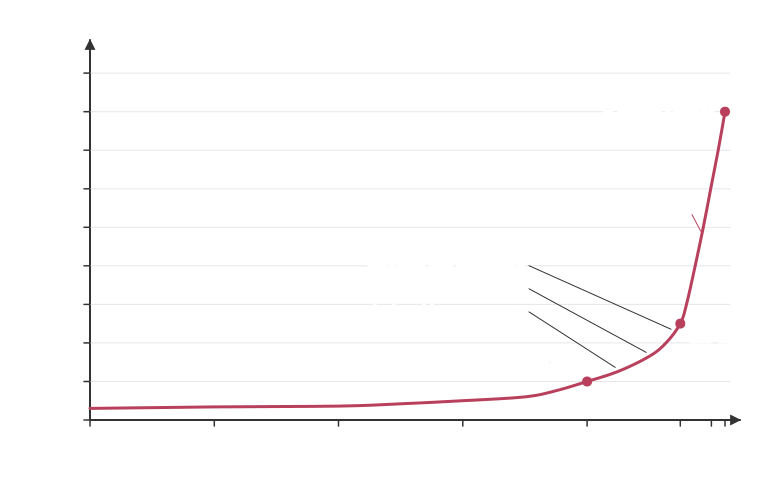
A population grows when the birth rate is greater than the death rate. Death rates fell sharply because of:
• improved agriculture (machinery, fertilisers, pesticides and high-yield crop varieties), giving more food;
• better sanitation and clean water;
Sign in free to see the rest of this lesson, the R.E.C.I.P.E. recall steps and the quiz
BrainCake is free. Make an account in seconds and pick up where this page stops.
Key terms in this lesson
- exponential growth
- Growth in which the rate of increase is proportional to the size of the population, producing a J-shaped curve.
More in Human Influence on Ecosystems
- Climate Change
- Depletion of Biological Resources
- Loss of Biodiversity
- The Burden of Proof
- Evaluating Studies
- Greenhouse Effect
- Evidence for the Global Temperature Increase
- Analysis of Ice Cores
All 29 lessons in Human Influence on Ecosystems · All Edexcel A-level Biology topics