 BRAINCAKE
Analysis of Ice Cores
The ice sheets of Antarctica and Greenland have built up from snow over hundreds of thousands of years. Scientists drill out long cylinders of ice called ice cores. Each year's snowfall forms a layer, so deeper ice is older. The longest Antarctic cores cover about 800,000 years.
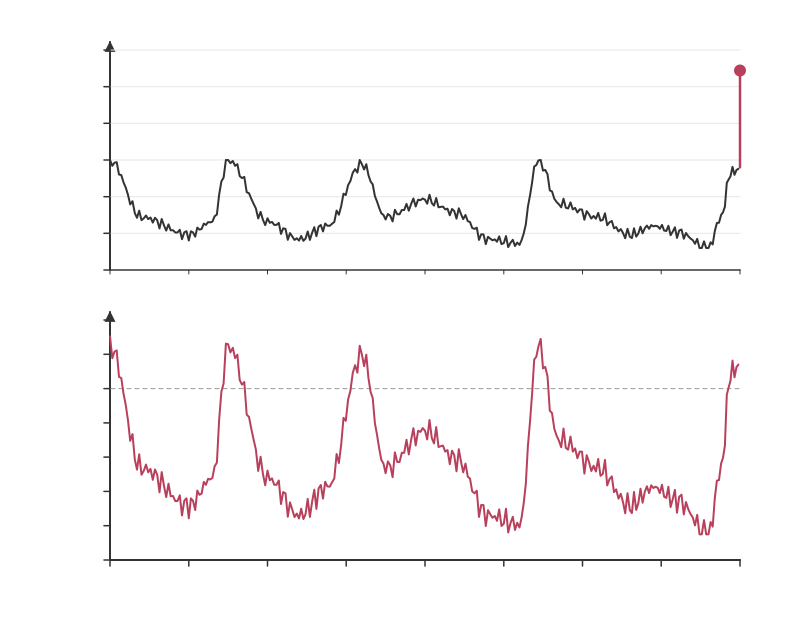
Carbon dioxide: as snow is compressed into ice, small bubbles of air are trapped. Extracting and analysing this air gives the concentrations of CO2 and methane in the atmosphere at the time.
Sign in free to see the rest of this lesson, the R.E.C.I.P.E. recall steps and the quiz
BrainCake is free. Make an account in seconds and pick up where this page stops.
More in Human Influence on Ecosystems
- The Burden of Proof
- Evaluating Studies
- Greenhouse Effect
- Evidence for the Global Temperature Increase
- Data Reliability
- Methane
- Correlation or Causation
- Models of Global Warming
All 29 lessons in Human Influence on Ecosystems · All Edexcel A-level Biology topics