 BRAINCAKE
Greenhouse Effect
The greenhouse effect is a natural process that keeps the Earth's surface warm enough for life. Without it the mean surface temperature would be about −18 °C instead of about 15 °C.
It works like this:
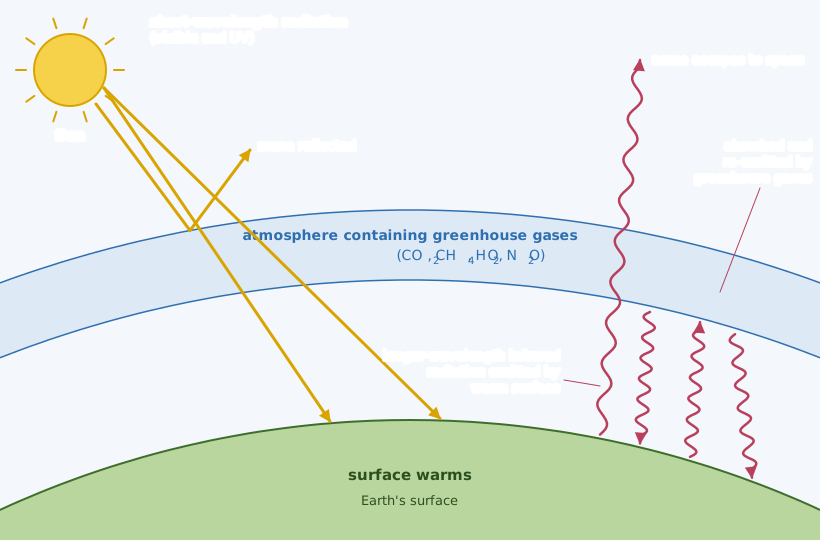
1. Short-wavelength radiation from the Sun (visible light and ultraviolet) passes through the atmosphere.
2. Some is reflected, but much is absorbed by the Earth's surface, which warms up.
3. The warm surface emits longer-wavelength infrared radiation.
4. Greenhouse gases in the atmosphere absorb some of this infrared radiation and re-emit it in all directions, including back towards the surface. This traps heat energy in the lower atmosphere.
Sign in free to see the rest of this lesson, the R.E.C.I.P.E. recall steps and the quiz
BrainCake is free. Make an account in seconds and pick up where this page stops.
More in Human Influence on Ecosystems
- Depletion of Biological Resources
- Loss of Biodiversity
- The Burden of Proof
- Evaluating Studies
- Evidence for the Global Temperature Increase
- Analysis of Ice Cores
- Data Reliability
- Methane
All 29 lessons in Human Influence on Ecosystems · All Edexcel A-level Biology topics