Skip to content

Vasodilation

Vasodilation is the widening of the arterioles that supply the capillaries near the skin surface. It is a response to a rise in core temperature.When the heat loss centre in the hypothalamus is activated, fewer impulses are sent along sympathetic nerves to the arterioles in the skin. The ring of smooth muscle in their walls relaxes, so the lumen widens. At the same time the shunt vessels constrict, so less blood bypasses the surface.As a result, much more blood flows through the capillaries just below the epidermis. Heat is transferred from this blood to the skin and then to the surroundings, mainly by radiation, and also by conduction and convection. Sweat on a warm skin surface also evaporates faster. The skin looks red or flushed, especially in people with pale skin.
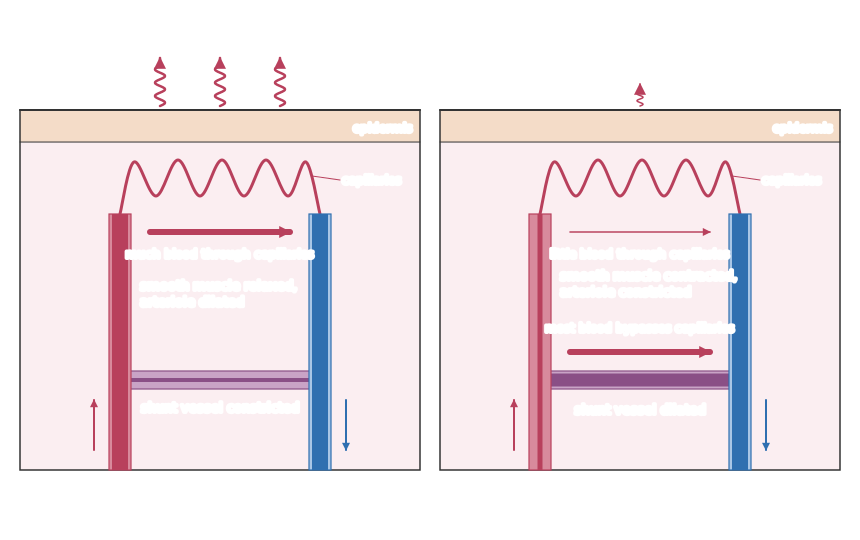
A common mistake is to say that capillaries dilate or move towards the surface. Capillaries have no muscle in their walls and cannot change position. It is the arterioles that dilate, sending more blood into the capillaries that are already there.Vasodilation only works when the surroundings are cooler than the skin. If the air is hotter than the skin, vasodilation would bring heat into the blood, so sweating becomes the main method of losing heat.

Read the text

Read the text and highlight anything you think is important. When you go on, the text is hidden and you answer from memory.

Specification: Edexcel Biology B (9BI0), A-level, 9.9 Osmoregulation and temperature regulation. Topic: Homeostasis.

Key terms in this lesson

arteriovenous shunt
A vessel linking an arteriole directly to a venule, allowing blood to bypass the surface capillaries.

More in Homeostasis

All 41 lessons in Homeostasis · All Edexcel A-level Biology topics