 BRAINCAKE
The Skin
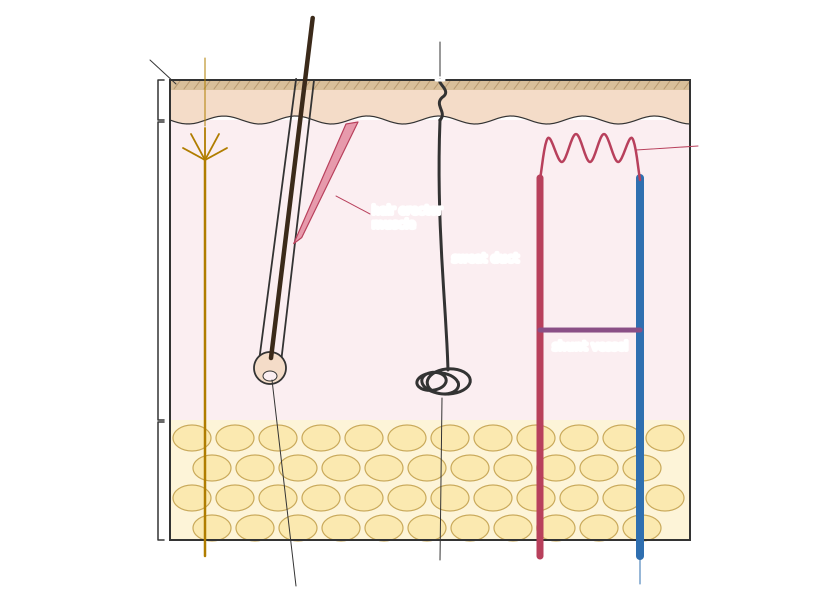
The skin is the main organ through which a mammal exchanges heat with its surroundings, so many thermoregulatory effectors are found there.
The skin has two layers above a layer of fat:
• The epidermis is the thin outer layer. Its surface is made of dead, keratinised cells that are waterproof and protect against infection.
• The dermis is the thicker inner layer. It contains blood vessels, sweat glands, hair follicles, nerve endings and thermoreceptors.
• Below this is the subcutaneous fat (adipose tissue), which insulates the body and stores energy.
Sign in free to see the rest of this lesson, the R.E.C.I.P.E. recall steps and the quiz
BrainCake is free. Make an account in seconds and pick up where this page stops.
Key terms in this lesson
- epidermis
- The thin, outer layer of the skin, made of waterproof, keratinised dead cells.
- dermis
- The thicker inner layer of skin, containing blood vessels, sweat glands, hair follicles and thermoreceptors.
- adipose tissue
- Fat-storing tissue beneath the dermis that insulates the body and stores energy.
- hair follicle
- The structure in the dermis from which a hair grows, attached to a hair erector muscle.
- arteriovenous shunt
- A vessel linking an arteriole directly to a venule, allowing blood to bypass the surface capillaries.
More in Homeostasis
- Control of Body Temperature
- Endotherms
- Ectotherms
- Thermoregulation in Endotherms
- Keeping Cool
- Keeping Warm
- Control of Core Body Temperature
- Vasodilation
All 41 lessons in Homeostasis · All Edexcel A-level Biology topics