 BRAINCAKE
Ultrafiltration
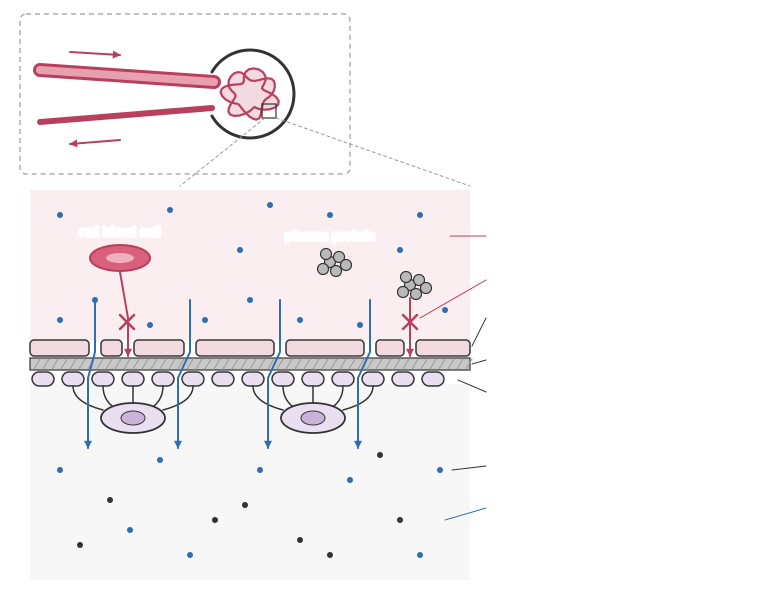
Ultrafiltration is the filtration of blood under high pressure in the Bowman's capsule. Small molecules are forced out of the glomerulus into the capsule, while blood cells and large proteins stay in the blood.
High hydrostatic pressure in the glomerulus is created because the afferent arteriole bringing blood in is wider than the efferent arteriole taking blood out. This pressure pushes fluid out of the capillaries into the capsule, even though the plasma proteins give the blood a lower water potential.
The fluid passes through three layers, which together form the filter:
Sign in free to see the rest of this lesson, the R.E.C.I.P.E. recall steps and the quiz
BrainCake is free. Make an account in seconds and pick up where this page stops.
Key terms in this lesson
- water potential
- A measure of the tendency of water molecules to move out of a solution, which determines the direction of osmosis.
More in Homeostasis
- Protein Homeostasis in the Liver
- Osmoregulation
- Osmoregulation in Mammals
- Structure and Function of the Kidney
- Selective Reabsorption
- Proximal Convoluted Tubule
- Loop of Henle
- Countercurrent Multiplier
All 41 lessons in Homeostasis · All Edexcel A-level Biology topics