Thermoregulation is the control of core body temperature. In endotherms it is a negative feedback system with the same parts as any homeostatic system.Receptors. Thermoreceptors detect temperature. Peripheral thermoreceptors in the skin detect changes in the temperature of the surroundings, giving early warning. Central thermoreceptors in the hypothalamus detect the temperature of the blood flowing through the brain, which reflects core temperature.Coordinator. The hypothalamus compares this information with the norm (about 37 °C in humans) and sends impulses along nerves of the autonomic nervous system. It also triggers some hormonal responses.Effectors. These bring about the correction:
• arterioles supplying the skin capillaries
• sweat glands
• hair erector muscles
• skeletal muscles (shivering)
• the liver and other tissues whose metabolic rate can change, controlled partly by the hormones adrenaline and thyroxineEndotherms also use behaviour, such as seeking shade or huddling together, and have anatomical features such as fur, feathers and fat layers that reduce heat loss.A typical sequence is: stimulus (core temperature rises) → detected by thermoreceptors → hypothalamus → effectors (for example, sweat glands) → response (more heat lost) → temperature falls back to the norm → the effectors are switched off. The feedback is negative because the response reverses the original change.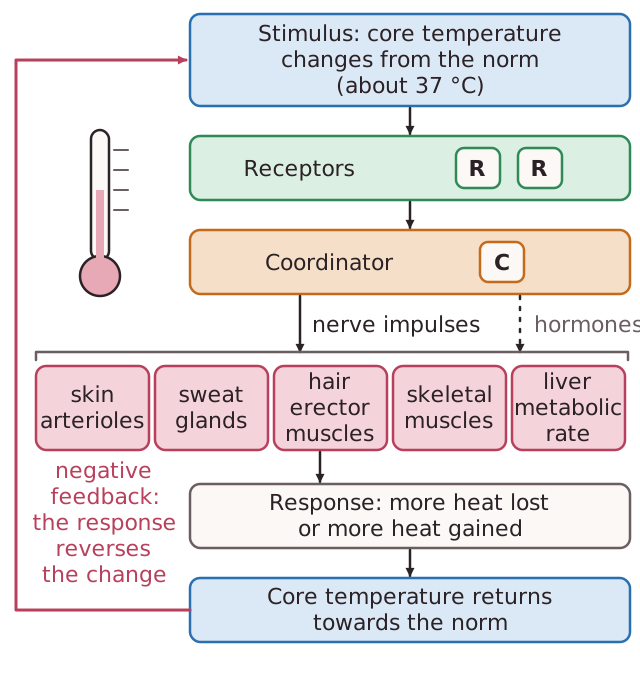 Because there are separate responses for raising and for lowering temperature, the control is more precise than a single mechanism would allow.
• arterioles supplying the skin capillaries
• sweat glands
• hair erector muscles
• skeletal muscles (shivering)
• the liver and other tissues whose metabolic rate can change, controlled partly by the hormones adrenaline and thyroxineEndotherms also use behaviour, such as seeking shade or huddling together, and have anatomical features such as fur, feathers and fat layers that reduce heat loss.A typical sequence is: stimulus (core temperature rises) → detected by thermoreceptors → hypothalamus → effectors (for example, sweat glands) → response (more heat lost) → temperature falls back to the norm → the effectors are switched off. The feedback is negative because the response reverses the original change.
Because there are separate responses for raising and for lowering temperature, the control is more precise than a single mechanism would allow.