 BRAINCAKE
How PCR Works
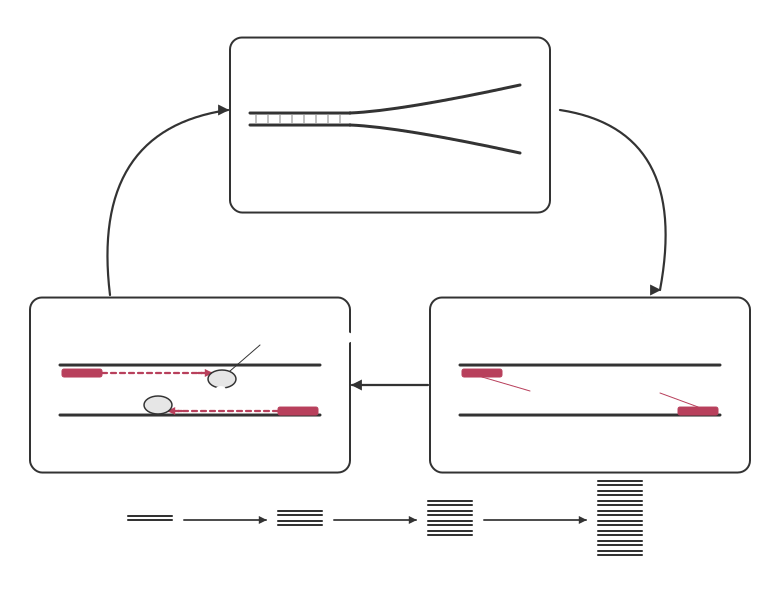
Each cycle of PCR has three stages, controlled by the thermal cycler.
1. Denaturation (about 95°C): the mixture is heated so the hydrogen bonds between complementary bases break. The double-stranded DNA separates into two single strands.
2. Annealing (about 55°C): the mixture is cooled so the primers can bind by complementary base pairing to the ends of the target sequence on each single strand. The primers give Taq polymerase a starting point.
Sign in free to see the rest of this lesson, the R.E.C.I.P.E. recall steps and the quiz
BrainCake is free. Make an account in seconds and pick up where this page stops.
Key terms in this lesson
- complementary base pairing
- The pairing of DNA or RNA bases according to fixed rules (A with T or U, C with G) by hydrogen bonding.
More in Gene Sequencing
- The Genome
- The Polymerase Chain Reaction
- DNA Sequencing
- Using DNA Sequencing
- Using DNA Sequencing to Manage Disease
- Introns and Satellite DNA
- DNA Profiles
- Gel Electrophoresis
All 12 lessons in Gene Sequencing · All Edexcel A-level Biology topics