Therapeutic cloning produces embryonic stem cells that are genetically matched to a patient. Its scientific name is somatic cell nuclear transfer (SCNT).The steps are:
1. The nucleus is removed from a donated egg cell, leaving an enucleated egg.
2. The nucleus of a somatic (body) cell, such as a skin cell, is taken from the patient and inserted into the enucleated egg.
3. A small electric shock stimulates the cell to start dividing by mitosis, as a zygote would.
4. After about five days it has developed into a blastocyst.
5. Embryonic stem cells are removed from the inner cell mass and grown in culture.
6. The stem cells are stimulated to differentiate into the tissue the patient needs.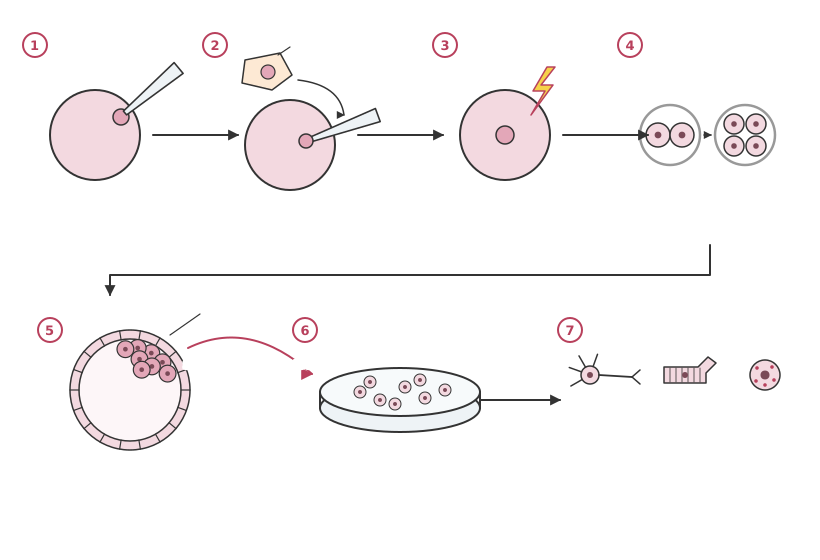
1. The nucleus is removed from a donated egg cell, leaving an enucleated egg.
2. The nucleus of a somatic (body) cell, such as a skin cell, is taken from the patient and inserted into the enucleated egg.
3. A small electric shock stimulates the cell to start dividing by mitosis, as a zygote would.
4. After about five days it has developed into a blastocyst.
5. Embryonic stem cells are removed from the inner cell mass and grown in culture.
6. The stem cells are stimulated to differentiate into the tissue the patient needs.