 BRAINCAKE
The Krebs Cycle
The Krebs cycle takes place in the mitochondrial matrix. It is a series of enzyme-controlled reactions that completely oxidises the acetyl groups from the link reaction.
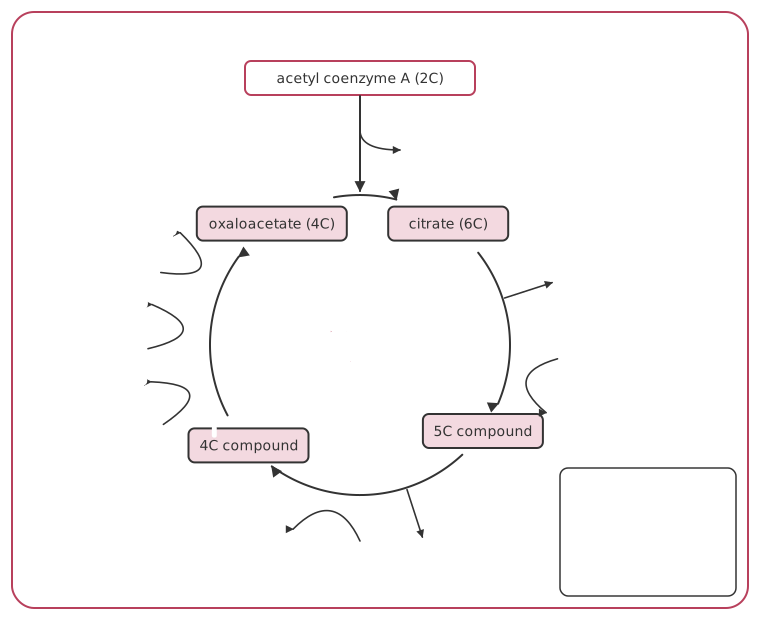
The main steps:
1. Acetyl coenzyme A (2C) combines with oxaloacetate (4C) to form citrate (6C). Coenzyme A is released and reused in the link reaction.
2. Citrate is decarboxylated and dehydrogenated to form a 5-carbon compound, releasing CO2 and producing reduced NAD.
3. The 5-carbon compound is decarboxylated and dehydrogenated again, forming a 4-carbon compound, CO2 and reduced NAD.
Sign in free to see the rest of this lesson, the R.E.C.I.P.E. recall steps and the quiz
BrainCake is free. Make an account in seconds and pick up where this page stops.
Key terms in this lesson
- mitochondrial matrix
- The fluid inside the inner mitochondrial membrane, containing the enzymes of the link reaction and Krebs cycle, coenzymes and mitochondrial DNA.
- fad
- A coenzyme (flavin adenine dinucleotide) that acts as a hydrogen acceptor at one step of the Krebs cycle, becoming reduced when it accepts hydrogen.
More in Cellular Respiration
- Sprint Athletes
- Anaerobic Respiration in Plants and Fungi
- Discovery of Glycolysis
- Aerobic Respiration: Summary
- The Link Reaction
- The Electron Transport Chain
- Chemiosmosis
- Net Gain of ATP
All 20 lessons in Cellular Respiration · All Edexcel A-level Biology topics