 BRAINCAKE
Chemiosmosis
Chemiosmosis is the process that uses the proton gradient built up by the electron transport chain to make ATP. The idea was proposed by Peter Mitchell in 1961 and won him a Nobel Prize in 1978.
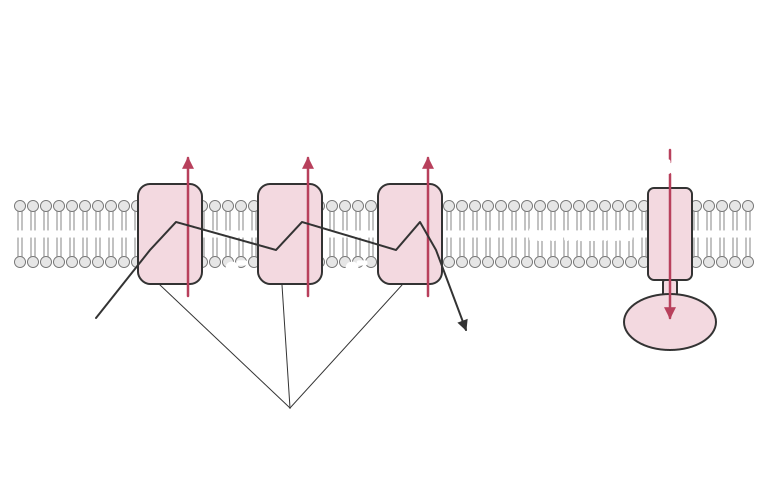
1. Energy from electrons in the electron transport chain is used to pump protons (H+) from the matrix into the intermembrane space.
2. Protons accumulate there, so their concentration is higher than in the matrix. This forms an electrochemical gradient (a difference in both concentration and charge), a store of potential energy.
3. The inner membrane is impermeable to protons, except through channels in the enzyme ATP synthase.
Sign in free to see the rest of this lesson, the R.E.C.I.P.E. recall steps and the quiz
BrainCake is free. Make an account in seconds and pick up where this page stops.
More in Cellular Respiration
- Sprint Athletes
- Anaerobic Respiration in Plants and Fungi
- Discovery of Glycolysis
- Aerobic Respiration: Summary
- The Link Reaction
- The Krebs Cycle
- The Electron Transport Chain
- Net Gain of ATP
All 20 lessons in Cellular Respiration · All Edexcel A-level Biology topics