A niche is the role of a species within its habitat. It includes all the ways the species interacts with its environment:
• biotic interactions, such as what it eats, what eats it and which species it competes with;
• abiotic interactions, such as the range of temperature, light, pH and moisture it can tolerate, and when and where it is active.A species occupies its niche because it is adapted to both the biotic and abiotic conditions there. Its anatomy, physiology and behaviour suit it to that particular way of life.A key principle is that no two species can occupy exactly the same niche in the same habitat. If two species did have identical niches, they would compete for exactly the same resources. One would be slightly better adapted and would outcompete the other, until only one species remained. This is called competitive exclusion.Species that live in the same habitat and seem similar usually have slightly different niches, which reduces competition between them. For example, several species of warbler feed on insects in the same conifer trees, but each species feeds mainly in a different part of the tree, such as the top, the outer branches or the lower branches.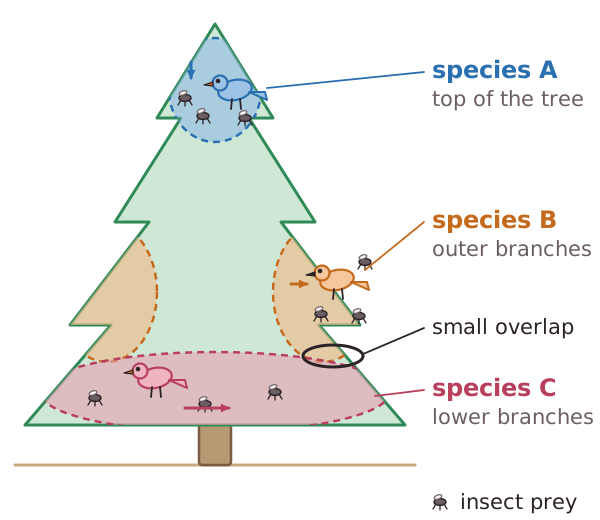 So the number of different niches in a habitat helps determine how many species it can support. A habitat with a wide variety of food, shelter and conditions provides many niches and usually has high species diversity.
• biotic interactions, such as what it eats, what eats it and which species it competes with;
• abiotic interactions, such as the range of temperature, light, pH and moisture it can tolerate, and when and where it is active.A species occupies its niche because it is adapted to both the biotic and abiotic conditions there. Its anatomy, physiology and behaviour suit it to that particular way of life.A key principle is that no two species can occupy exactly the same niche in the same habitat. If two species did have identical niches, they would compete for exactly the same resources. One would be slightly better adapted and would outcompete the other, until only one species remained. This is called competitive exclusion.Species that live in the same habitat and seem similar usually have slightly different niches, which reduces competition between them. For example, several species of warbler feed on insects in the same conifer trees, but each species feeds mainly in a different part of the tree, such as the top, the outer branches or the lower branches.
So the number of different niches in a habitat helps determine how many species it can support. A habitat with a wide variety of food, shelter and conditions provides many niches and usually has high species diversity.