Intraspecific competition is competition between individuals of the same species for the same resources, such as food, water, light, space, breeding sites and mates.Because individuals of one species have the same niche, they need exactly the same resources, so this competition can be intense. Individuals that are better adapted, for example stronger, faster or better at finding food, are more likely to survive and reproduce.Intraspecific competition makes populations rise and fall in a cycle:
1. When resources are plentiful, most individuals survive and reproduce, so the population increases.
2. As numbers rise, more individuals share the same resources, so each gets less. Competition increases.
3. Resources become limiting. Fewer individuals survive or breed, so the population decreases.
4. With fewer individuals, there is less competition and more resources each, so the population increases again.This is why the size of a population fluctuates around the carrying capacity. The larger the population, the stronger the competition, so intraspecific competition limits population size and is a major reason the carrying capacity is not exceeded for long.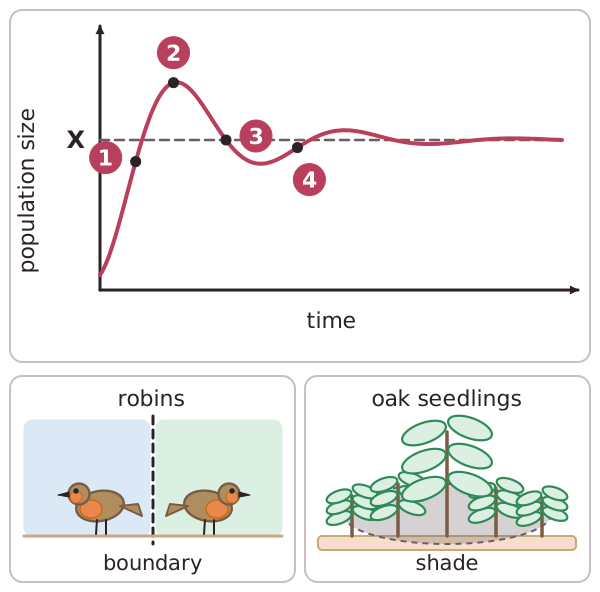 Examples include:
• robins defending territories, where birds without a territory cannot breed;
• oak seedlings growing close together, where the tallest shade out the others;
• limpets on a rocky shore competing for algae.Intraspecific competition affects the size of a population but does not change which species are present.
1. When resources are plentiful, most individuals survive and reproduce, so the population increases.
2. As numbers rise, more individuals share the same resources, so each gets less. Competition increases.
3. Resources become limiting. Fewer individuals survive or breed, so the population decreases.
4. With fewer individuals, there is less competition and more resources each, so the population increases again.This is why the size of a population fluctuates around the carrying capacity. The larger the population, the stronger the competition, so intraspecific competition limits population size and is a major reason the carrying capacity is not exceeded for long.
Examples include:• robins defending territories, where birds without a territory cannot breed;
• oak seedlings growing close together, where the tallest shade out the others;
• limpets on a rocky shore competing for algae.Intraspecific competition affects the size of a population but does not change which species are present.