 BRAINCAKE
Carrying Capacity
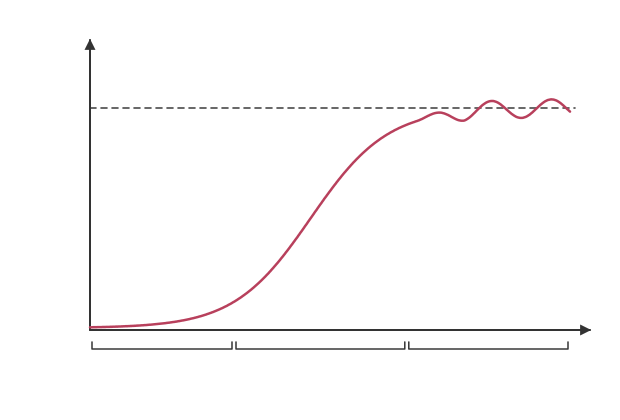
The carrying capacity is the maximum population size of a species that an ecosystem can support. It is set by the supply of resources, such as food, water, space and light, and by other limiting factors in the environment.
When a species colonises a new area, its population usually grows in a pattern called a sigmoid (S-shaped) growth curve.
Sign in free to see the rest of this lesson, the R.E.C.I.P.E. recall steps and the quiz
BrainCake is free. Make an account in seconds and pick up where this page stops.
More in Populations in Ecosystems
- Populations and Communities
- Ecosystems
- Niches
- Abiotic Factors and Population Size
- Biotic Factors and Population Size
- Intraspecific Competition
- Interspecific Competition
- Predator-Prey Relationships
All 20 lessons in Populations in Ecosystems · All AQA A-level Biology topics