 BRAINCAKE
Predator-Prey Relationships
Predation is when one organism, the predator, kills and eats another, the prey. The sizes of predator and prey populations are linked, and often rise and fall in regular cycles.
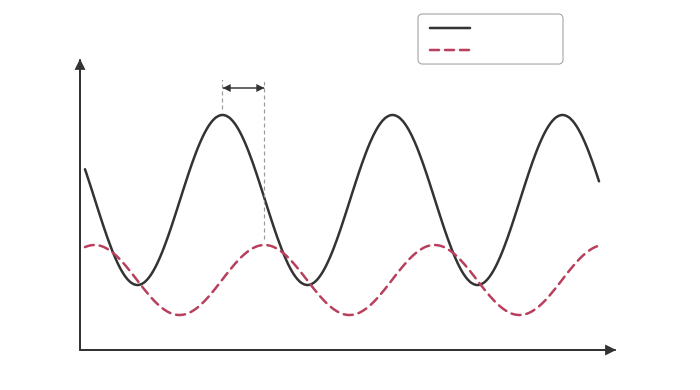
The cycle can be explained in steps:
1. The prey population increases, so there is more food for predators.
2. More predators survive and breed, so the predator population increases.
3. More prey are eaten, so the prey population decreases.
4. Now there is less food for the predators, so fewer survive and breed, and the predator population decreases.
5. With fewer predators, fewer prey are eaten, so the prey population increases again, and the cycle repeats.
Sign in free to see the rest of this lesson, the R.E.C.I.P.E. recall steps and the quiz
BrainCake is free. Make an account in seconds and pick up where this page stops.
More in Populations in Ecosystems
- Abiotic Factors and Population Size
- Biotic Factors and Population Size
- Intraspecific Competition
- Interspecific Competition
- Estimating Population Size with Quadrats
- Random Sampling with Quadrats
- Systematic Sampling along Transects
- Mark-Release-Recapture
All 20 lessons in Populations in Ecosystems · All AQA A-level Biology topics