 BRAINCAKE
The Role of Synapses
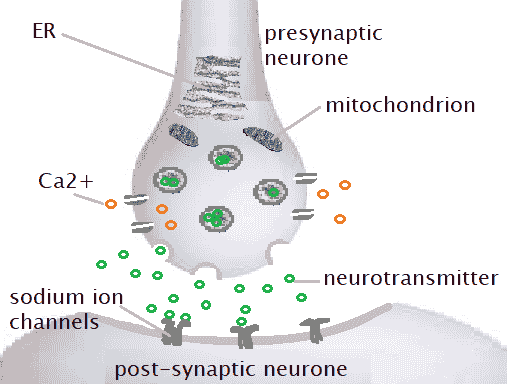
Synapses ensure impulses can travel in only one direction.
They allow a single impulse from a single neurone to be transmitted to multiple neurones via multiple synapses.
In addition, multiple neurones can connect to the same neurone so many neurones can interact to produce a single result.
Sign in free to see the rest of this lesson, the R.E.C.I.P.E. recall steps and the quiz
BrainCake is free. Make an account in seconds and pick up where this page stops.
Key terms in this lesson
- neurotransmitter
- A chemical released by a presynaptic neurone that diffuses across a synapse and binds to receptors on the postsynaptic cell, altering its membrane potential.
- synapse
- The junction between two neurones, or between a neurone and a muscle or gland cell, where information is transmitted chemically.
- action potential
- A rapid, temporary reversal of the electrical charge across an axon membrane (depolarisation followed by repolarisation) that occurs when a stimulus exceeds the threshold value.
More in Neuronal Communication
- Saltatory Conduction
- Synapses
- Neurotransmitters
- Transmission of Impulse across Synapse
- Summation
- Structural Organisation of the Nervous System
- Functional Organisation of the Nervous System
- The Autonomic Nervous System
All 38 lessons in Neuronal Communication · All AQA A-level Biology topics