 BRAINCAKE
Glucagon
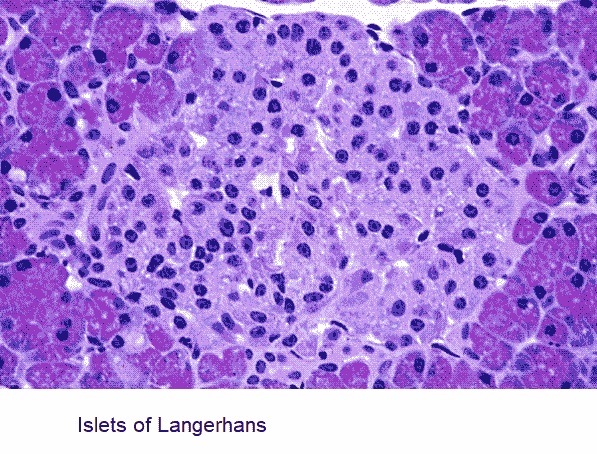
Insulin and glucagon are antagonistic hormones. Glucagon is produced by the alpha cells of the islets of Langerhans in response to a low blood sugar concentration. The only cells that have glucagon receptors are liver cells and fat cells. Glucagon raises the blood glucose concentration by breaking down glycogen in the liver (glycogenolysis), reducing the amount of glucose absorbed by liver cells and increasing gluconeogenesis.
Sign in free to see the rest of this lesson, the R.E.C.I.P.E. recall steps and the quiz
BrainCake is free. Make an account in seconds and pick up where this page stops.
Key terms in this lesson
- hormone
- A chemical messenger, secreted by an endocrine gland directly into the blood, that travels to target cells bearing complementary receptors and brings about a response.
- insulin
- A hormone secreted by the beta cells of the islets of Langerhans in response to a rise in blood glucose concentration, which lowers blood glucose by stimulating cells to take up and use or store glucose.
- islets of Langerhans
- Groups of endocrine cells within the pancreas containing alpha cells (which secrete glucagon) and beta cells (which secrete insulin).
- glycogenolysis
- The breakdown of glycogen into glucose, which raises blood glucose concentration.
- gluconeogenesis
- The formation of glucose from non-carbohydrate sources such as amino acids and fatty acids.
More in Hormonal Communication
- The Adrenal Glands
- Adrenal Cortex
- Adrenal Medulla
- Pancreas
- Blood glucose concentration
- Insulin
- Mechanism of Insulin Secretion
- Diabetes Mellitus
All 11 lessons in Hormonal Communication · All AQA A-level Biology topics