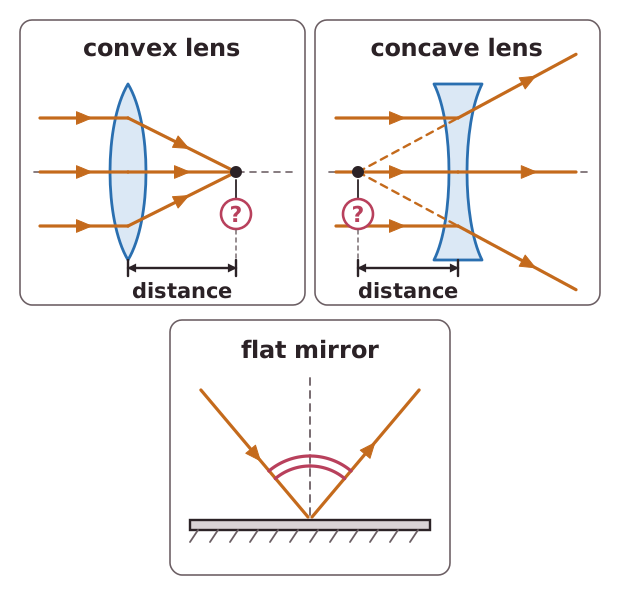
In a ray diagram light is drawn as straight lines with arrows. The normal is drawn at right angles to the surface where a ray meets it. In reflection from a smooth surface, the angle of incidence equals the angle of reflection, both measured from the normal. In refraction, a ray entering glass bends towards the normal and a ray leaving glass bends away from it.
A lens is a curved piece of transparent material that refracts light. A convex lens is thicker in the middle. It brings parallel rays together at a point called the principal focus, so it is a converging lens. A concave lens is thinner in the middle. It spreads parallel rays apart, so it is a diverging lens, and the rays appear to come from its principal focus. Both lenses refract light and both have a principal focus, but they bend the rays in opposite ways.
The behaviour of the lens decides how it is used. A convex lens helps with long-sightedness by bringing light together before it enters the eye. A concave lens spreads the light slightly, which corrects short-sightedness.