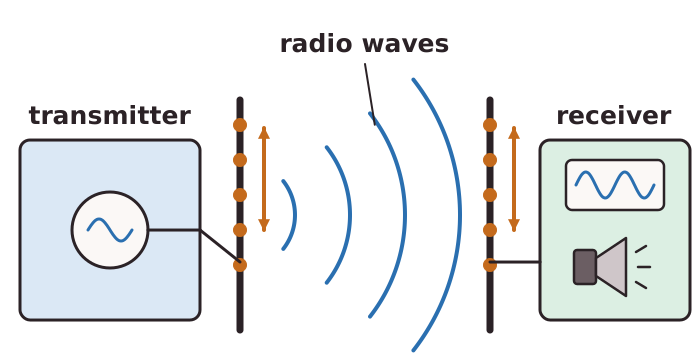
Radio waves are produced by oscillations in electrical circuits. In a transmitter, an alternating current makes electrons in the aerial move backwards and forwards. These oscillating charges give out radio waves with the same frequency as the alternating current.
The process also works in reverse. A receiving aerial absorbs radio waves, and this makes the electrons in it oscillate. This induces an alternating current in the receiver circuit with the same frequency as the radio waves.
The receiver then processes this signal, for example to produce sound from a radio. A radio station is tuned in by choosing the frequency of the signal the receiver responds to.