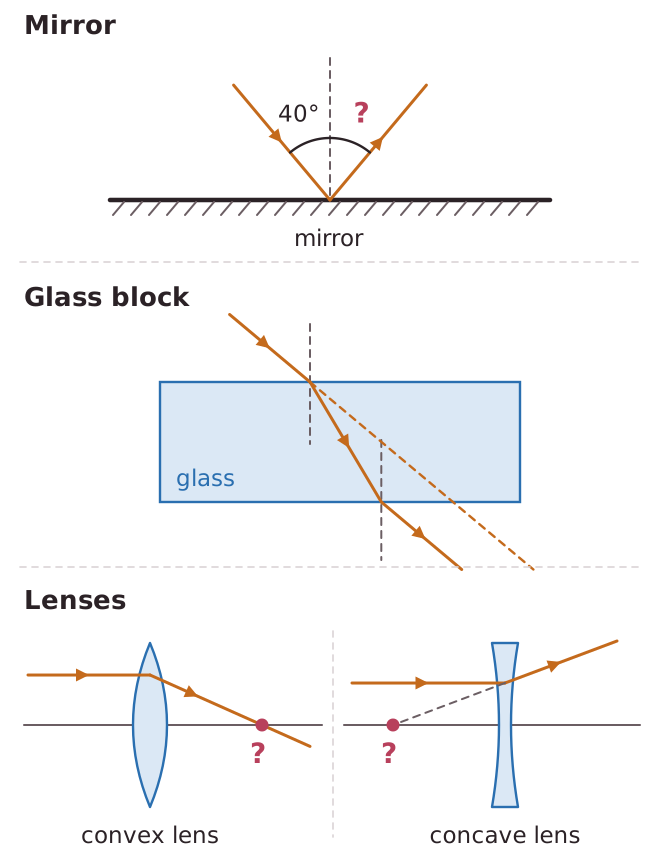
To construct a ray diagram for reflection, use a ruler and a sharp pencil. Draw the surface, then draw the normal at right angles to it at the point where the ray hits. Draw the incident ray to that point and measure the angle of incidence from the normal. Draw the reflected ray on the other side of the normal at the same angle. For example, you might measure an angle of incidence of 25 degrees with a protractor. Add arrows to show the direction of travel.
For refraction through a rectangular glass block, draw a normal at each surface. At the first surface the ray slows down and bends towards the normal, so the angle in the glass is smaller than the angle in the air. At the second surface the ray speeds up and bends away from the normal. The ray that leaves the block is parallel to the ray that entered, but it is shifted sideways. No equations are needed, only the correct direction of bending.
For a lens, draw a ray parallel to the principal axis. A convex lens bends it so that it passes through the principal focus on the far side. A concave lens bends it outwards, so that it appears to come from the principal focus on the side the ray started from.