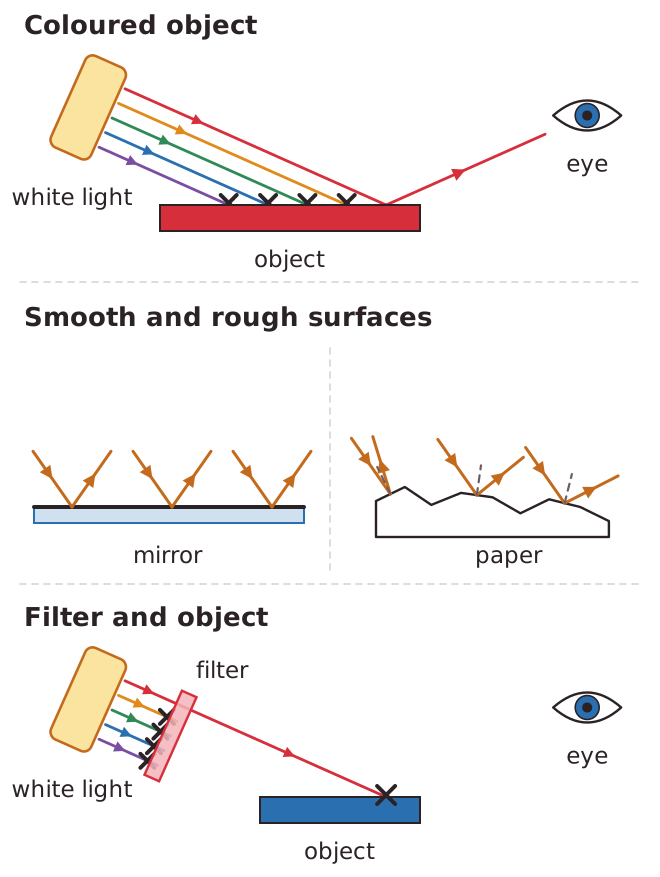
The colour of an opaque object depends on which colours of light its surface reflects and which it absorbs. An object that looks red in white light reflects red light and absorbs the other colours. A white object reflects all colours, and a black object absorbs all colours. If only green light shines on a red object, there is no red light to reflect and the object looks black.
A smooth surface such as a mirror gives specular reflection. Parallel rays hit it and are all reflected in the same direction, so a clear image forms. A rough surface such as paper scatters the light, because the surface faces in many directions and the rays are reflected in many directions. We see most objects because their surfaces scatter light into our eyes.
A coloured filter is transparent and transmits some colours while it absorbs the others. A red filter transmits red light and absorbs the rest. It does not add colour, it removes colours. A blue object seen through a red filter looks black, because the blue light it reflects is absorbed by the filter.