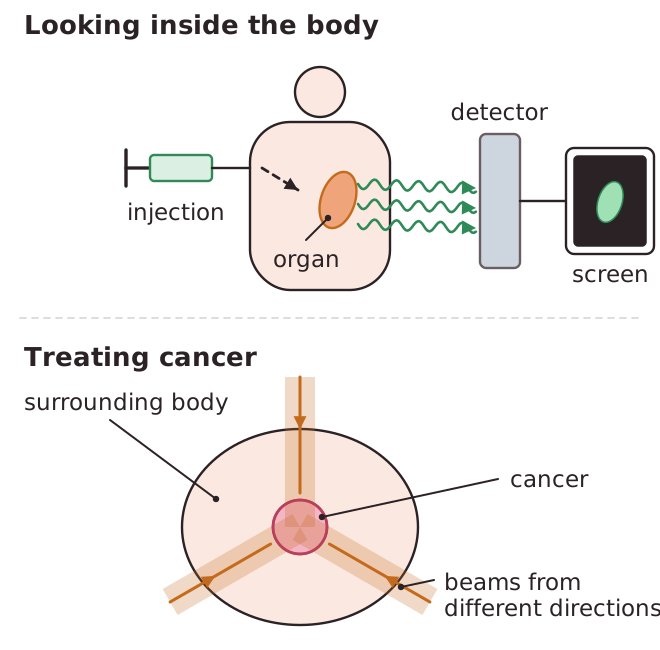
Nuclear radiation has important uses in medicine. One use is to explore the inside of the body without surgery. A radioactive tracer is a small amount of a radioactive substance that is swallowed or injected. It travels around the body and collects in an organ, such as the thyroid or the kidneys. A detector outside the body picks up the radiation and builds up a picture of where the tracer went and how well the organ is working. Substances used like this are called tracers.
Tracers must emit gamma radiation. Alpha and beta radiation would be absorbed by the body, so a detector outside could not pick them up. A tracer must also have a short half-life, often a few hours. Then it decays quickly and the patient is exposed to radiation for only a short time.
Radiation can also destroy unwanted tissue. In radiotherapy, high energy gamma rays are aimed at a tumour. The radiation damages the cancer cells and can kill them. The beam is directed at the tumour from several different directions, so the tumour gets a high dose while the healthy tissue around it gets a much lower dose. Some healthy cells are still damaged, which is why patients can have side effects.