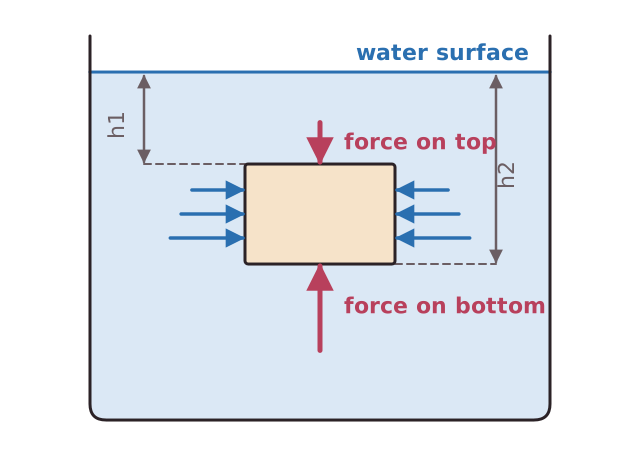
The pressure in a liquid is caused by the weight of the liquid above a point. The deeper you go, the more liquid there is above you, so the weight is greater and the pressure increases with depth. A denser liquid has a greater weight in the same volume, so at the same depth a denser liquid gives a greater pressure. Liquid pressure acts in all directions, at right angles to any surface it touches.
Now think about an object in the liquid. Pressure means force on each unit of area, so a bigger pressure on a surface gives a bigger force on it. The lower surface of the object is deeper than its upper surface, so the pressure on the lower surface is greater. This makes the upward force on the bottom larger than the downward force on the top.
The difference between these two forces is a resultant force that acts upwards. This is the upthrust. It acts on a partially submerged object in the same way, because the part of the object under the surface still has a greater pressure on its lowest surface than the liquid higher up.