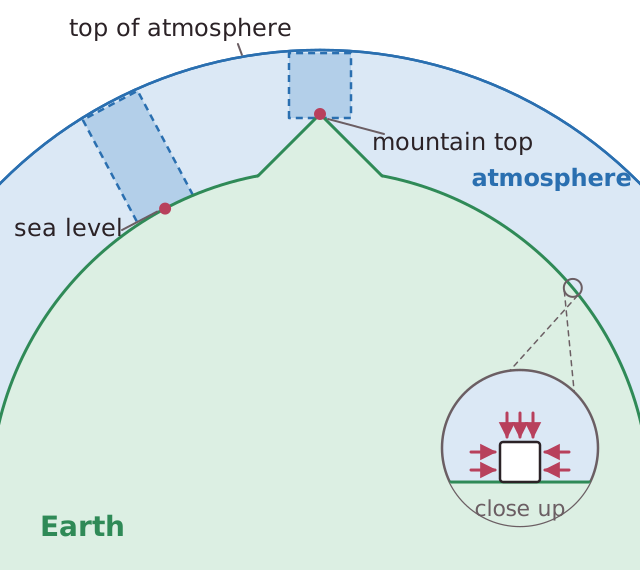
The Earth is surrounded by a layer of air called the atmosphere, held in place by gravity. The air molecules are in constant random motion and are constantly colliding with every surface, including you. Each collision gives a tiny push, and billions of them every second add up to atmospheric pressure.
The pressure at any point in the atmosphere is caused by the weight of all the air above that point. At sea level there is a very tall column of air above you. If you climb a mountain, there is less air above you, so the weight of air above gets smaller and the pressure decreases.
A simple model treats the atmosphere as a layer of air of the same density throughout, with a top edge. In that model, the pressure falls steadily as height increases. In the real atmosphere the air also becomes less dense with height, so there are fewer molecules in each cubic metre and fewer collisions with a surface every second. At very great heights there is almost no air left, so the pressure is close to zero.