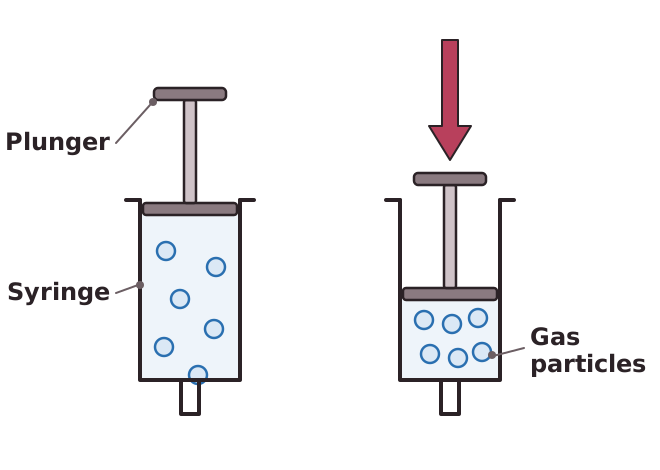
A gas can be compressed, which means squashed into a smaller volume, and it can expand into a larger one. This happens when the pressure changes. If you push the plunger into a syringe of air, the pressure rises and the volume of the air decreases. Gases are easy to compress because their particles are far apart, with a lot of empty space between them. The particles in a liquid or a solid are close together, so water or sand in a syringe cannot be compressed in the same way.
The pressure of a gas produces a force on any surface it touches. This force acts at right angles to the surface. For a force at right angles, pressure (Pa) = force (N) divided by area (m2). For example, 100 N acting on an area of 0.5 m2 gives a pressure of 200 Pa.
If the pressure is different on the two sides of a surface, there is a net force acting from the side of higher pressure towards the side of lower pressure. When most of the air is pumped out of a can, the atmospheric pressure outside is greater than the pressure inside. The net force pushes the walls inwards and the can collapses.