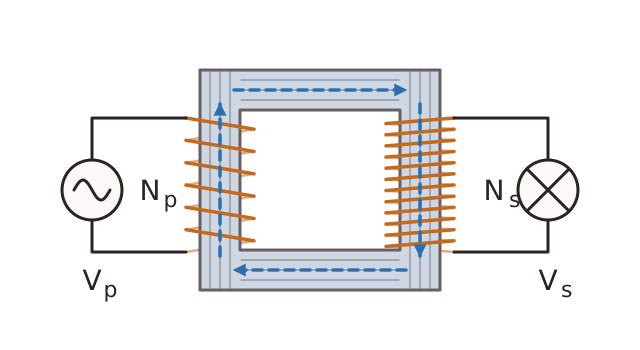
The transformer equation is Vs / Vp = Ns / Np. Potential difference is in volts (V) and N is just a number of turns. To find an unknown, rearrange the equation: Vs = Vp × Ns / Np, or Ns = Np × Vs / Vp. In each case you multiply by the quantity that is on top of the ratio you want, and divide by the matching quantity from the other coil.
Example 1: a 230 V supply is connected to a primary coil of 1000 turns. The secondary coil has 50 turns. Vs = 230 × 50 / 1000 = 11.5 V. This is a step-down transformer, because the secondary has fewer turns and the potential difference is lower.
Example 2: a 12 V supply is connected to a primary coil of 100 turns and the secondary coil gives 240 V. 240 / 12 = 20, so the secondary potential difference is 20 times bigger and Ns = 100 × 240 / 12 = 2000 turns. This is a step-up transformer.