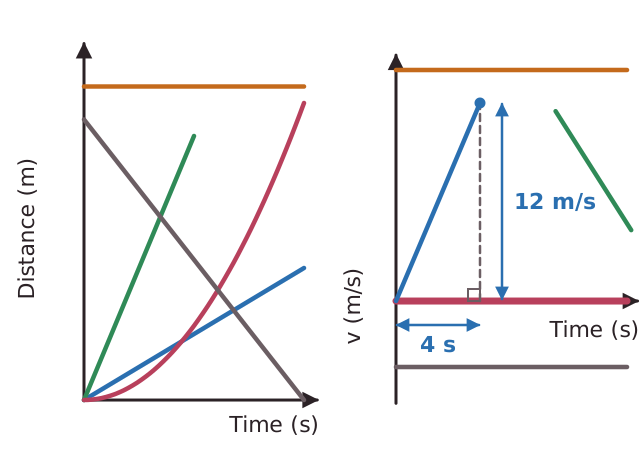
On a distance-time graph the gradient is the speed. A horizontal line means the object is stationary. A straight sloping line means constant speed, and a steeper line means a greater speed. A curve that gets steeper means the object is accelerating, because its speed is increasing. A line sloping back down to zero distance means the object is returning to its start.
On a velocity-time graph the gradient is the acceleration, found from change in velocity ÷ time. A horizontal line at a value above zero means constant velocity. A straight line sloping upwards means uniform acceleration. A line sloping downwards means the object is slowing down (decelerating). A line along the time axis, at zero velocity, means the object is stationary.
If the line goes below the time axis, the velocity is negative, so the object is moving in the opposite direction. To find an acceleration, draw a triangle on the line. For a line rising from 0 to 12 m/s in 4 s, the gradient is 12 ÷ 4 = 3 m/s squared.