Speed tells us how far an object travels each second. When the distance and time are measured, speed = distance ÷ time. Distance is in metres, time is in seconds and speed is in metres per second (m/s). Rearranged, distance = speed × time.
The average speed of a whole journey is the total distance divided by the total time. It is not the same as the speed at one moment.
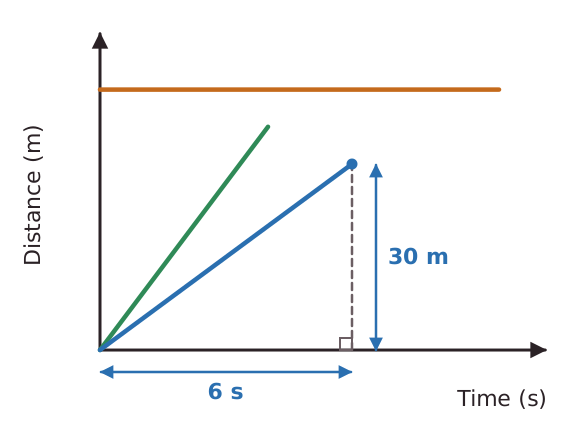
A distance-time graph shows how far an object has travelled from its start at each moment. The gradient (slope) of the line is the speed. To find it for a straight line, draw a right-angled triangle on the line, then divide the change in distance by the change in time. For example, a line reaching 30 m after 6 s has a gradient of 30 ÷ 6 = 5 m/s.
A straight sloping line means constant speed. A steeper line means a greater speed. A horizontal line means the distance does not change, so the object is stationary.