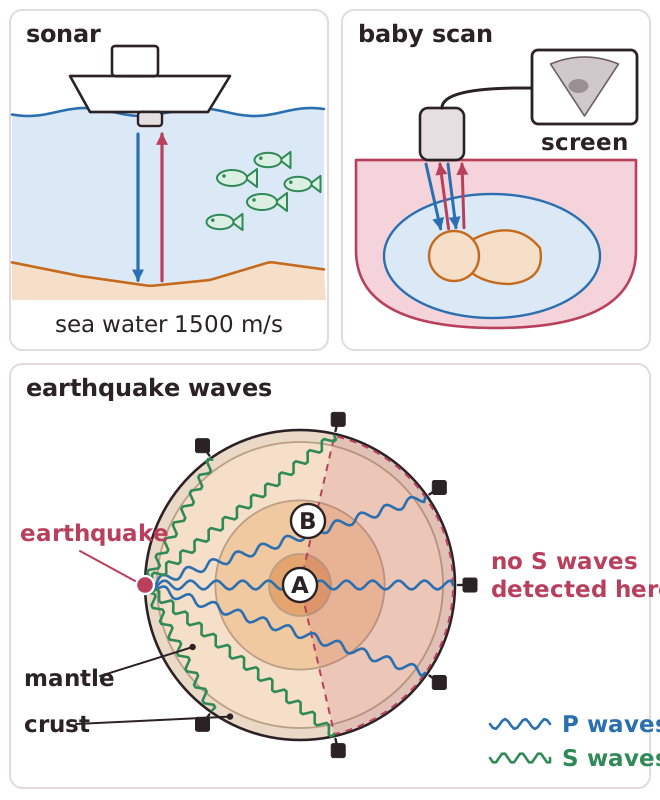
Sonar. A transmitter on a ship sends a pulse of ultrasound down through the water. It reflects off the seabed, or a shoal of fish, and the echo is picked up by a detector. The distance is found from the time between sending the pulse and receiving the echo. The pulse travels there and back, so distance = speed × time, divided by two. Sound in sea water travels at about 1500 m/s, so an echo returning after 0.2 s means a depth of 1500 × 0.2 ÷ 2 = 150 m.
Foetal scanning. A probe sends pulses of ultrasound into the body. Some of the ultrasound is reflected at each boundary between different tissues, such as the fluid around the baby and the baby's skin. A computer uses the time delay and strength of the echoes to build up an image. Ultrasound is non-ionising, so unlike X-rays it does not damage cells, which makes it safe for a developing baby.
The Earth's core. Earthquakes produce low frequency waves, including infrasound. P waves are longitudinal and travel through solids and liquids. S waves are transverse and only travel through solids. Seismometers around the world record the waves. S waves are not detected on the far side of the Earth, which shows that the outer core is liquid. The waves also change speed and refract as they pass through the Earth, which tells scientists about its layers.