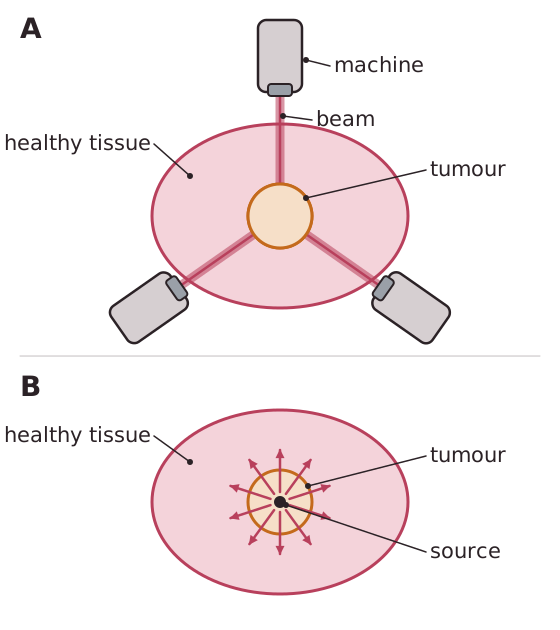
Radiation can kill the cells of a tumour. Doctors choose between two approaches. In external treatment a machine outside the body fires a beam of gamma rays at the tumour. The beam is aimed from several directions so that it always crosses the tumour but only briefly crosses any one patch of healthy tissue. This means the tumour gets a high dose and the healthy tissue gets a smaller dose. No surgery is needed, and the patient is not radioactive afterwards.
In internal treatment a small radioactive source is placed inside the tumour or right next to it, for example as a tiny implant, or a substance is swallowed or injected so that it collects in the affected organ. Because the source is so close, the tumour receives a higher dose and the surrounding healthy tissue receives less. The source should have a short half-life so that it soon stops being dangerous.
The cost of this is that the patient is radioactive while the source is in place. Visits from other people are limited, and the patient may be kept in isolation for a time to protect staff and visitors. Both methods can still damage some healthy cells, so the dose is chosen carefully.