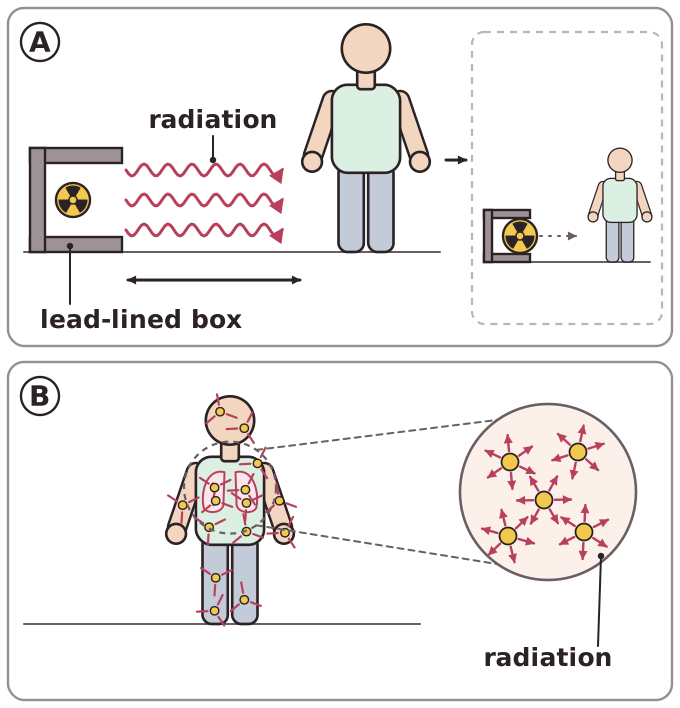
Irradiation happens when an object or person is exposed to radiation from a source that is outside it. The object does not become radioactive. The exposure stops when the source is removed, moved away or shielded.
Contamination means unwanted radioactive atoms are on or inside an object or person, for example as dust or liquid that is touched, breathed in or swallowed. The contaminated object keeps irradiating itself or others until the atoms decay or are removed. You cannot just walk away from contamination inside your body, and it can spread to other places.
The hazard depends on the type of radiation. An alpha source outside the body is a low hazard, because alpha radiation is stopped by the skin or a few centimetres of air. Inside the body, an alpha source is very dangerous, because alpha is strongly ionising and gives all its energy to the nearby tissue. Contamination is controlled with gloves, protective suits, masks and washing.
Radiation is also used to treat tumours. In external treatment, a beam is aimed at the tumour from several directions, so the dose is concentrated on the tumour and healthy tissue receives a lower dose. In internal treatment, a small source is placed inside or next to the tumour. This gives a high dose to the tumour, but it needs a procedure and the patient gives out radiation for a while.