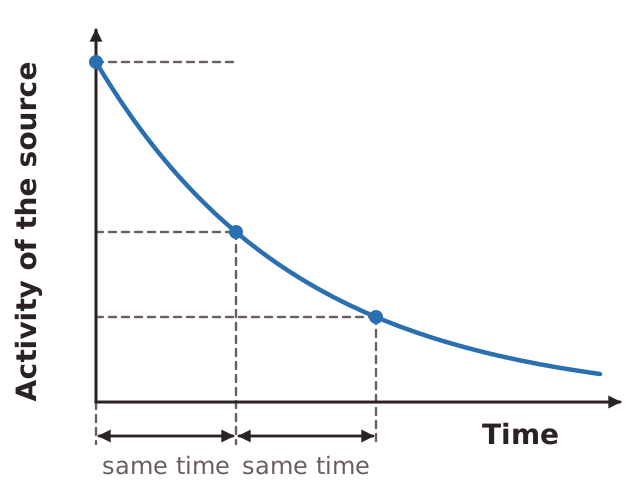
The activity of a radioactive source is the number of nuclei that decay each second. Radioactive decay is a random process: we cannot tell when a particular nucleus will decay, only that each unstable nucleus has a chance of doing so.
Every time a nucleus decays it changes into a different nucleus and cannot decay in the same way again. So as time passes there are fewer undecayed nuclei left in the source. With fewer undecayed nuclei, fewer decays happen per second, which means the activity falls. Fewer undecayed nuclei means a lower activity. A Geiger-Müller tube placed near the source would show the count rate falling in the same way.
The fall is not at a steady rate. At the start there are many undecayed nuclei, so the activity falls quickly. Later there are fewer, so it falls more slowly. If the activity is plotted against time, the line is a curve that gets flatter and flatter. The activity gets closer and closer to zero but never quite reaches it in practice. The activity of a source always decreases over time.