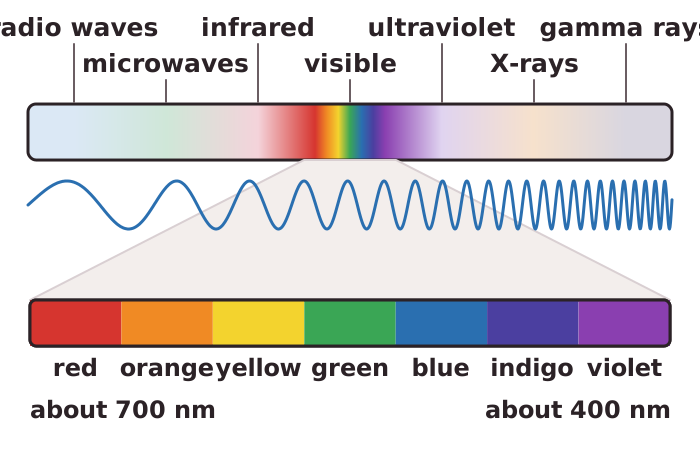
Our eyes can only detect a limited range of the frequencies of electromagnetic radiation. This range is visible light, which is only a small part of the whole spectrum. Cells in the retina respond to these frequencies and no others. Visible light has wavelengths of roughly 400 nm to 700 nm.
Within visible light, different colours have different frequencies. Red light has the lowest frequency we can see and violet light has the highest. Just below red is infrared, which has a lower frequency, and just above violet is ultraviolet, which has a higher frequency. Both have frequencies outside the range of our eyes, so we cannot see them.
Other radiation is still there even though we cannot see it. We can feel infrared as warmth, and ultraviolet can burn our skin. Some animals detect a different range from us. Bees, for example, can see ultraviolet.