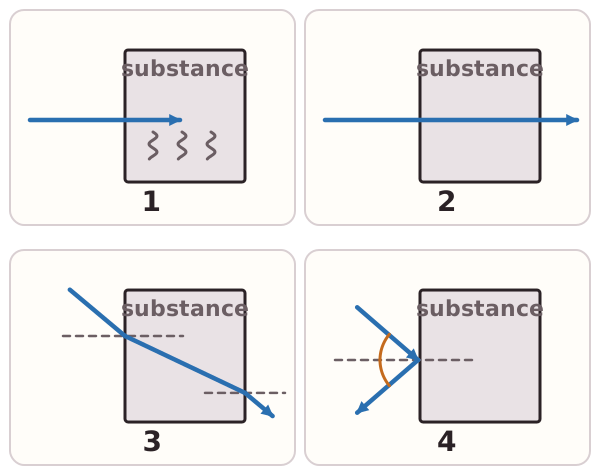
When an electromagnetic wave meets a substance, one of four things can happen. It can be absorbed, which transfers its energy to the substance. It can be transmitted, which means it passes through. It can be refracted, which means it changes direction as it enters a new substance at an angle. Or it can be reflected, which means it bounces off the surface.
Which of these happens depends on the substance and on the wavelength of the wave. The same material can treat different parts of the spectrum in very different ways. Glass transmits visible light but absorbs much of the ultraviolet. The atmosphere transmits visible light and most radio waves, but absorbs most ultraviolet, X-rays and gamma rays arriving from space.
Metals reflect radio waves and microwaves, which is why satellite dishes are made of metal. Water absorbs microwaves, so the energy is transferred to the water in food and the food gets warmer. Soft tissue transmits most X-rays but bone absorbs more of them, which is how an X-ray image shows bones.