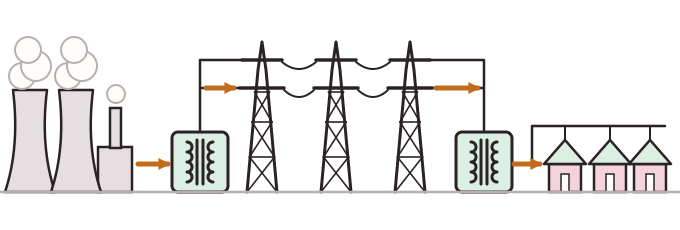
The National Grid is a system of cables and transformers that links power stations to consumers. It carries electrical power from where it is generated to homes, shops and factories across the country.
A step-up transformer at the power station increases the potential difference to a very high value before the electricity travels along the transmission cables. Near the consumers, step-down transformers decrease the potential difference to a much lower, safer value for domestic use.
The grid is an efficient way to transfer energy because of the equation P = VI. For a given power, a higher potential difference means a smaller current. A current heats the cables, and the energy wasted as heat depends on I2R. Suppose raising the potential difference ten times makes the current ten times smaller: the heating loss falls by 100 times, since 102 = 100. With a small current, little energy is transferred to the surroundings as heat, so most of the energy reaches the consumer.