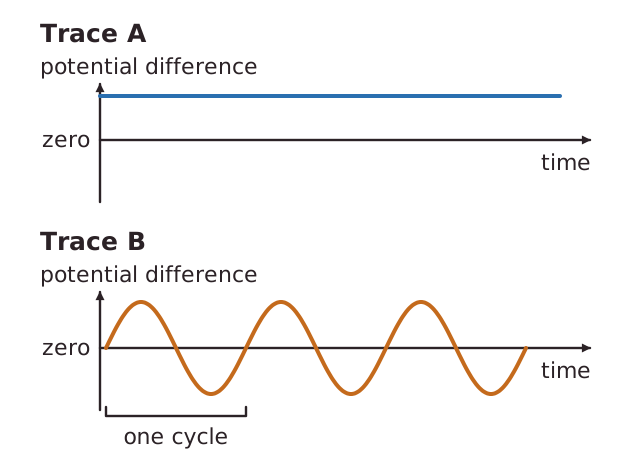
A cell or battery gives a direct potential difference. The potential difference always pushes current in one direction around the circuit, so the current flows the same way all the time. This is often written as dc.
An alternating potential difference keeps changing direction. The current in the circuit therefore keeps changing direction too, flowing one way and then the other, over and over. This is often written as ac.
Mains electricity is an ac supply. In the United Kingdom the domestic mains supply has a frequency of 50 Hz, which means the potential difference completes 50 cycles every second. Its value is about 230 V. Battery-powered devices use direct potential difference, while the sockets in your home supply alternating potential difference.