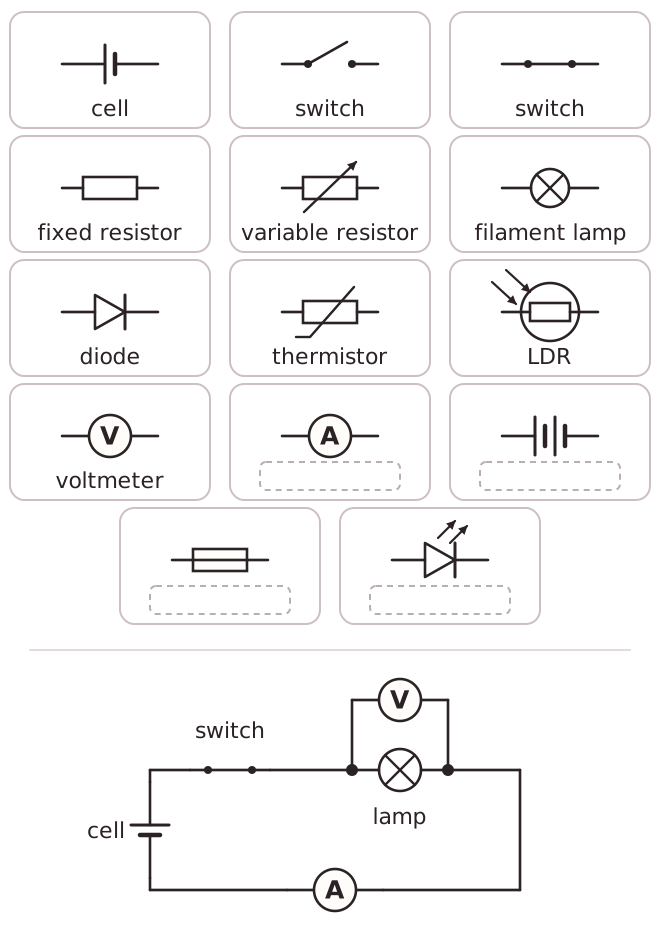
Circuit diagrams use standard symbols so that anyone can read them. Each component has its own symbol and the components are joined by straight lines that stand for wires. A cell is a single source of potential difference, and two or more cells joined together make a battery. A switch is open when there is a gap in the circuit and closed when the gap is filled. Charge can only flow round a closed circuit, which is a complete loop.
A fixed resistor has one constant value of resistance, while a variable resistor can be adjusted to change its resistance. A filament lamp gives out light when current heats its filament, and a fuse melts and breaks the circuit if the current is too high. A diode lets current flow in one direction only, and an LED (light-emitting diode) is a diode that gives out light. A thermistor is a resistor that responds to temperature, and an LDR is a resistor that responds to light.
Two meters appear in many diagrams. An ammeter measures current and is drawn as a circle containing the letter A. A voltmeter measures potential difference and is drawn as a circle containing the letter V. An ammeter is always connected in series with the component, so the current passes through it. A voltmeter is always connected in parallel with the component, on its own branch across the component.