 BRAINCAKE
Free-Body Force Diagrams
A free-body force diagram isolates all the forces acting on an object.
Weight is a gravitational force acting through the centre of mass of an object towards the centre of the Earth (downwards)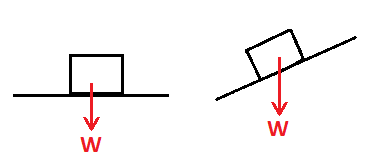
Friction arises when two surfaces in contact with each other move relative to one another and rub against each other. Friction always acts in the opposite direction to an object's motion against a surface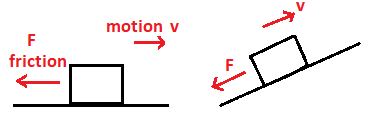
Drag is a resistive force on an object travelling through a fluid such as air (air resistance) or water.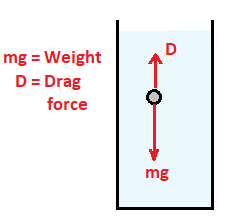
Tension is the force within a stretched cable or rope opposing the stretching of the rope.
Sign in free to see the rest of this lesson, the R.E.C.I.P.E. recall steps and the quiz
BrainCake is free. Make an account in seconds and pick up where this page stops.
Key terms in this lesson
- resultant
- The single force or vector that has the same effect as two or more forces or vectors acting together.
- weight
- The gravitational force acting on an object's mass.
- centre of mass
- The single point at which the whole mass of an object may be considered to act.
- resistance
- The ratio of the potential difference across a component to the current through it.
More in Forces and Motion
- Projectile Motion
- Car Stopping Distances
- Weight, Mass, Accleration
- Centre of Mass
- Drag and Terminal Velocity
- Moments and Equilibrium
- Couples and Torques
- Forces in Equilibrium
All 17 lessons in Forces and Motion · All OCR AS-level Physics topics