A free-body force diagram isolates all the forces acting on an object.All bodies are modelled as point objects with the weight acting at the centre. Equal length arrows acting in opposite direction indicate forces in equilibrium.The object is considered in isolation. Only the forces in contact with the object and the non-contact forces acting on the object are considered.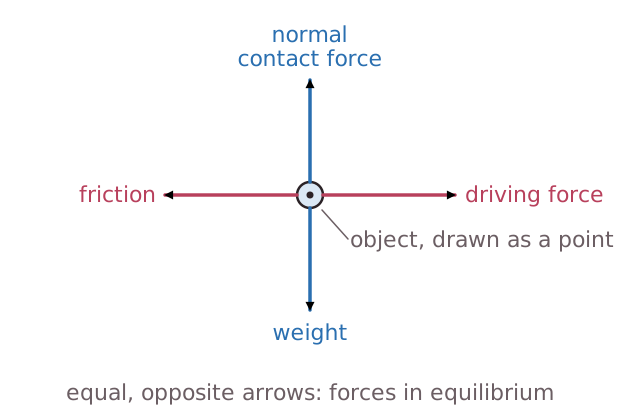
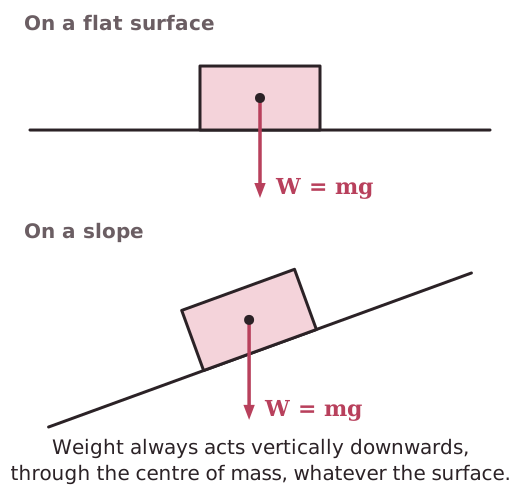
Weight is a gravitational force acting through the centre of mass of an object towards the centre of the Earth (downwards)
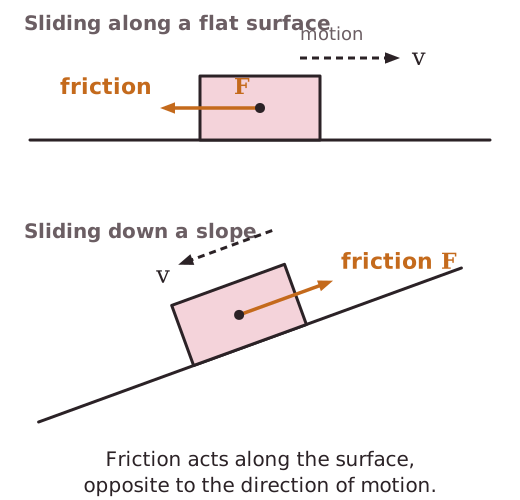
Friction arises when two surfaces in contact with each other move relative to one another and rub against each other. Friction always acts in the opposite direction to an object's motion against a surface
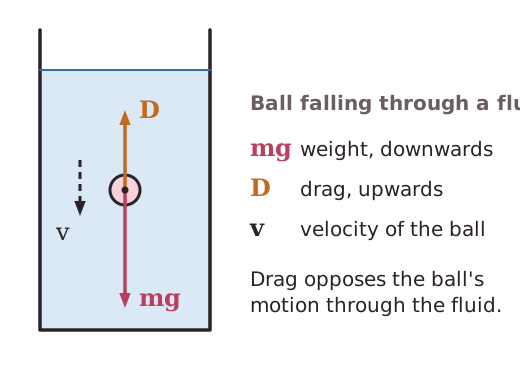
Drag is a resistive force on an object travelling through a fluid such as air (air resistance) or water.
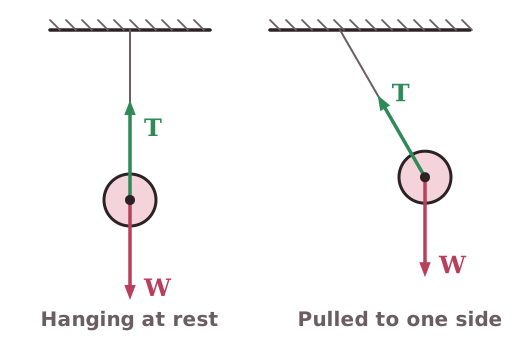
Tension is the force within a stretched cable or rope opposing the stretching of the rope.
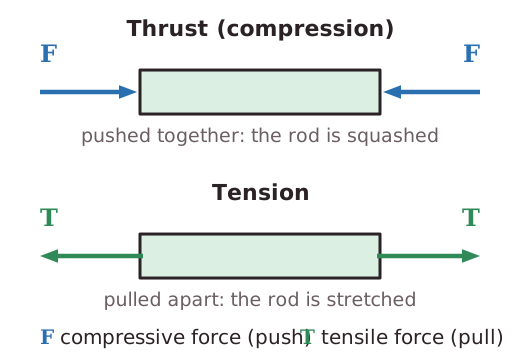
Thrust is the force within a compressed object opposing the compression of the object.
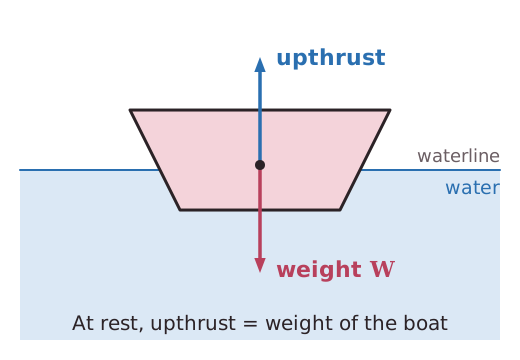
Upthrust is the buoyant force acting on an object when it is in a fluid. Upthrust is equal to the weight of the fluid displaced.
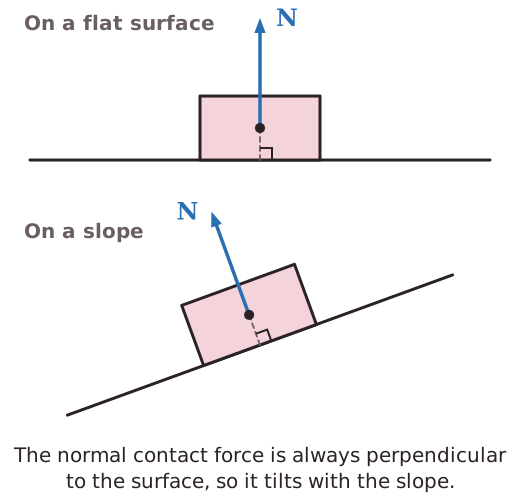
The normal contact force arises when one object is in contact with another and always acts perpendicular to the plane of contact.
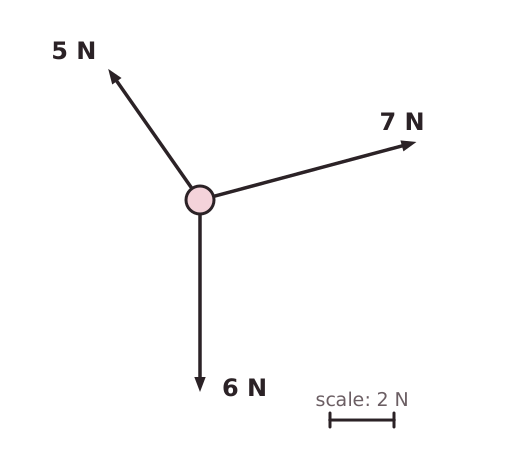
In a free-body force diagram each force is represented by an arrow. The arrows are drawn to scale: the length of the arrow is proportional to the size of the force.
The arrow points in the direction of the force. The three forces acting on an object are shown below
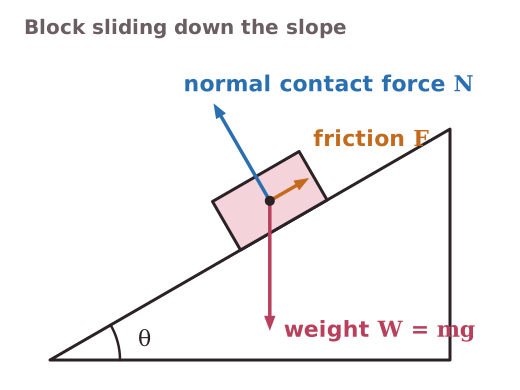
An object on a slope has three forces acting on it: weight, normal contact force and friction.
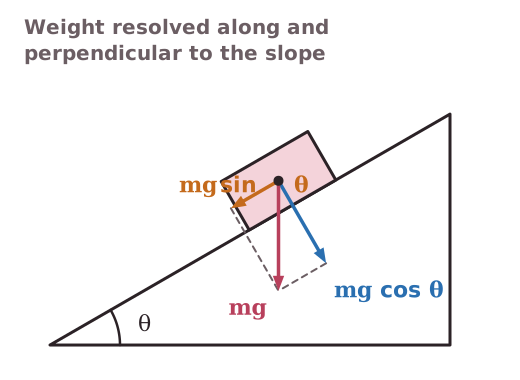
The weight can be resolved into components parallel and perpendicular to the plane of the slope.
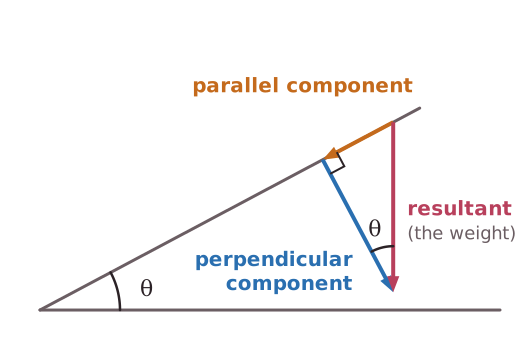
The resultant is always the hypotenuse of a triangle formed by the components.
Weight is a gravitational force acting through the centre of mass of an object towards the centre of the Earth (downwards)
Friction arises when two surfaces in contact with each other move relative to one another and rub against each other. Friction always acts in the opposite direction to an object's motion against a surface
Drag is a resistive force on an object travelling through a fluid such as air (air resistance) or water.
Tension is the force within a stretched cable or rope opposing the stretching of the rope.
Thrust is the force within a compressed object opposing the compression of the object.
Upthrust is the buoyant force acting on an object when it is in a fluid. Upthrust is equal to the weight of the fluid displaced.
The normal contact force arises when one object is in contact with another and always acts perpendicular to the plane of contact.
In a free-body force diagram each force is represented by an arrow. The arrows are drawn to scale: the length of the arrow is proportional to the size of the force.
The arrow points in the direction of the force. The three forces acting on an object are shown below
An object on a slope has three forces acting on it: weight, normal contact force and friction.
The weight can be resolved into components parallel and perpendicular to the plane of the slope.
The resultant is always the hypotenuse of a triangle formed by the components.