Skip to content

Biodiesel

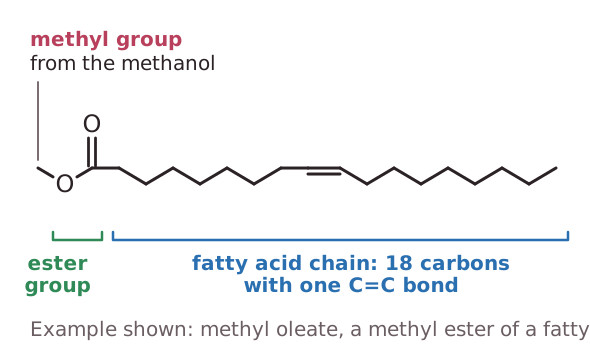
Biodiesel is a renewable fuel that can be made from triglyceride esters in oil crops such as rape seed. The oil is reacted with methanol in the presence of an acid or alkali catalyst to form a mixture of methyl esters which can be used with little or no modification in diesel engines. Biodiesel is cheaper than diesel obtained from crude oil and can be home-made using oil from restaurants.Biodiesel is a methyl or ethyl ester of a fatty acid. The process of making biodiesel is known as trans-esterification. Methanol or ethanol can be used in the presence of sodium or potassium hydroxide.
Read the text

Read the text and highlight anything you think is important. When you go on, the text is hidden and you answer from memory.

Specification: OCR Chemistry A (H432), A-level, 6.1.3 Carboxylic acids and esters. Topic: Carbonyl Compounds.

Key terms in this lesson

biodiesel
A renewable diesel fuel made from the methyl or ethyl esters of the fatty acids in vegetable oils, by trans-esterification.
triglyceride
An ester formed from glycerol and three long-chain carboxylic acids, called fatty acids.

More in Carbonyl Compounds

All 12 lessons in Carbonyl Compounds · All OCR A-level Organic Chemistry topics