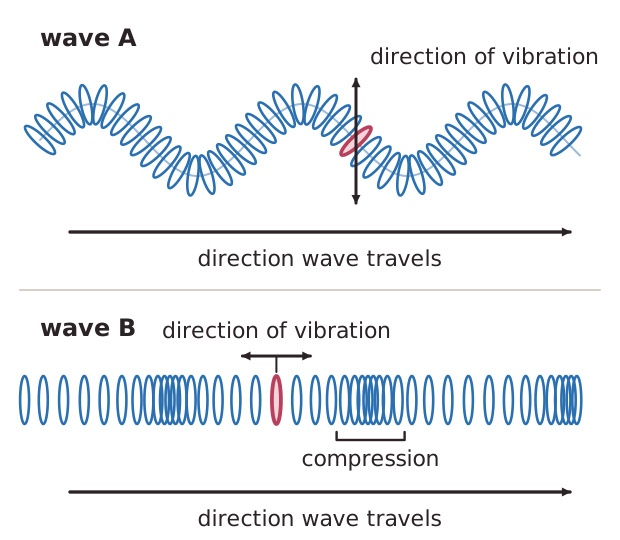
Waves are classed by how the vibrations relate to the direction the wave travels. In a transverse wave the vibrations are at right angles (perpendicular) to the direction of travel. Ripples on water and waves on a rope are transverse. The wave has crests and troughs.
In a longitudinal wave the vibrations are parallel to the direction of travel. Sound is longitudinal. The wave is a series of compressions, where the particles are pushed close together, and rarefactions, where the particles are spread apart.
A slinky spring models both types. If you move one end from side to side, a transverse wave travels along it. If you push and pull one end along the length of the spring, a longitudinal wave travels along it. In both cases the coils only vibrate about their rest position. The wave transfers energy, but the material does not travel with it.