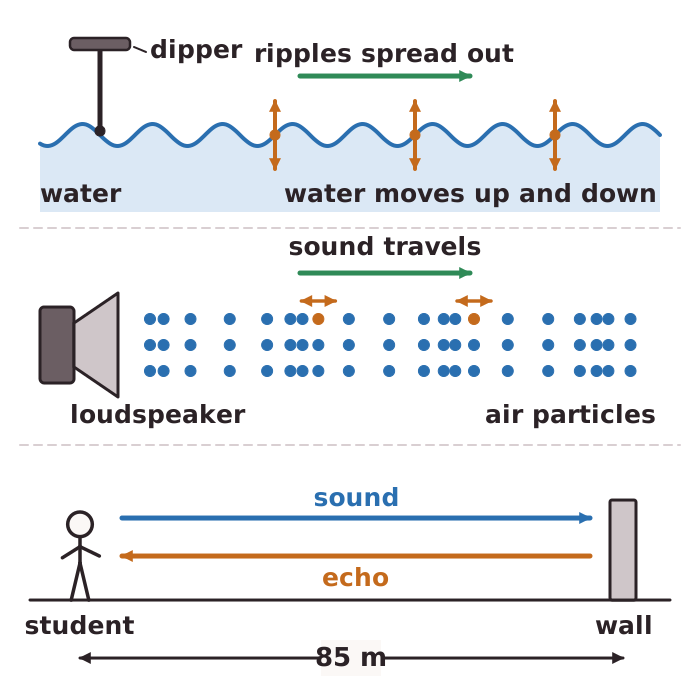
Ripples on the surface of water are used as a model of transverse waves. The water surface moves up and down at right angles to the direction the ripples spread out. Sound waves in air are longitudinal: the air particles vibrate backwards and forwards along the direction the sound travels.
The speed of ripples can be found in a ripple tank. Measure the wavelength with a ruler, find the frequency from the vibrating dipper, then use speed = frequency × wavelength. Ripples are slow, only a few tenths of a metre per second.
The speed of sound in air is about 330 m/s, which is much faster than ripples. Values measured in the classroom vary a little because of reaction time and the size of the distances used. One way to measure it is with an echo. A student claps near a wall a known distance away and times the echo. The sound travels to the wall and back, so the total distance is twice the distance to the wall. Then speed = total distance ÷ time. Another way is to use two microphones a measured distance apart, connected to a timer, and divide that distance by the time delay between them.