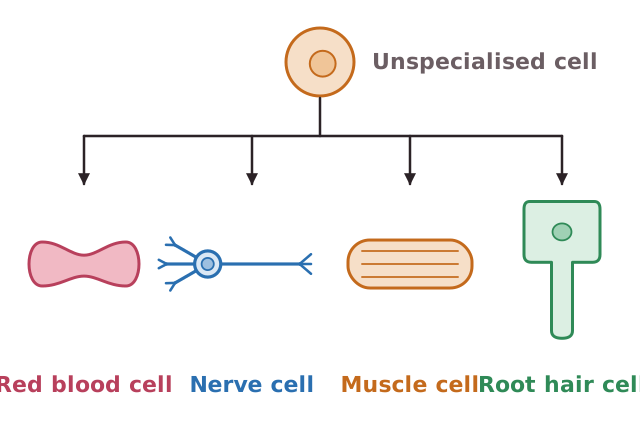
A fertilised egg divides by mitosis to make many cells that are all the same at first. As an organism develops, most of these cells go through differentiation. This means a cell changes to become specialised, with a structure that suits one particular job.
Specialised cells make a many-celled organism much more efficient. If every cell had to do every job, none would do any job well. Instead, groups of the same specialised cells form tissues, tissues form organs, and organs work together in organ systems.
There are many examples. A red blood cell has no nucleus and is full of haemoglobin, so it carries a lot of oxygen. A nerve cell is long and carries electrical impulses. A muscle cell contains fibres that contract to cause movement. A root hair cell has a long thin extension that gives a large surface area to absorb water and mineral ions.