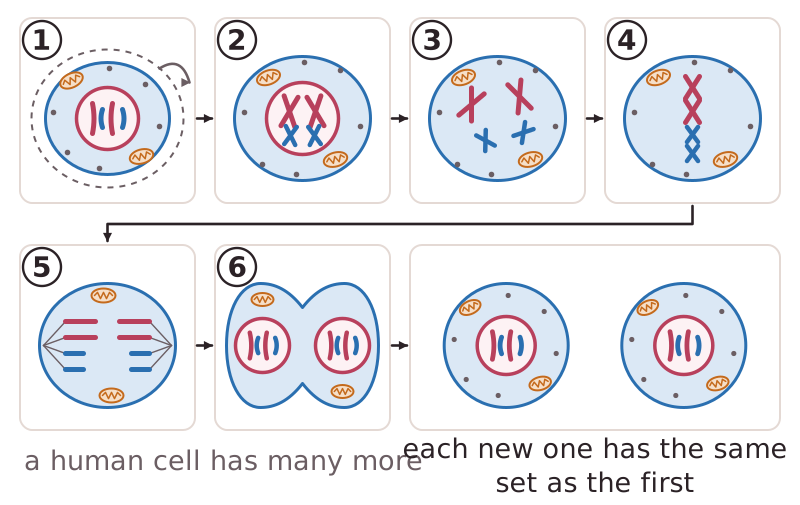
Organisms grow by making more cells. Cells make new cells by dividing, and before a cell divides it goes through a series of stages called the cell cycle.
First the cell grows and makes more of its sub-cellular structures, such as ribosomes and mitochondria. Then the DNA is copied in a process called DNA replication, so that there are two full sets of chromosomes. The cell grows a bit more and the chromosome copies are checked.
Next comes mitosis. The chromosomes line up and are pulled apart, so that one copy of each chromosome moves to opposite ends of the cell. Two nuclei form, then the cytoplasm and cell membrane divide.
Mitosis produces two daughter cells. Each has the same number of chromosomes as the parent cell (46 in a human body cell) and is genetically identical to it. Mitosis is used for growth and for repair of damaged tissue.