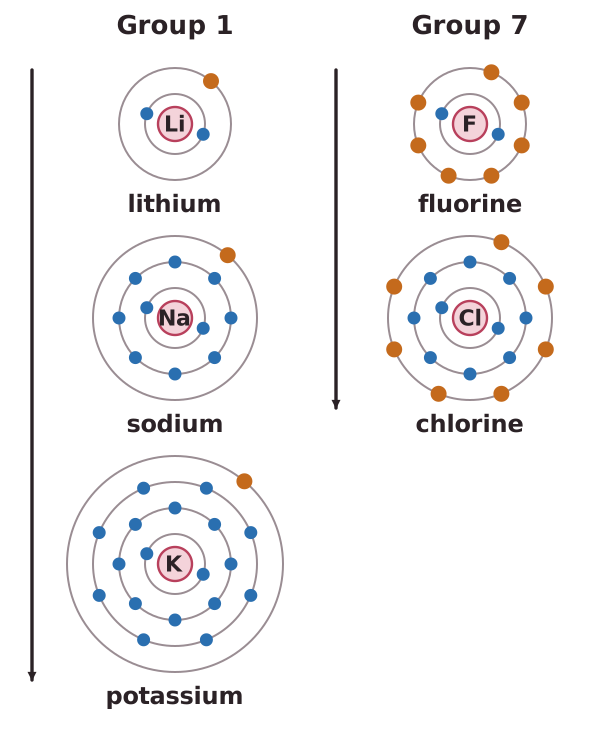
The group number tells you how many electrons are in the outer shell of an atom. Group 1 atoms have one outer electron, Group 7 atoms have seven and Group 0 atoms have a full outer shell. Reactions happen because atoms lose or gain outer electrons.
A Group 1 atom reacts by losing its one outer electron to form a 1+ ion. Going down the group the outer electron is further from the nucleus, so it is held less strongly and is lost more easily. This is why reactivity increases down Group 1. A Group 7 atom reacts by gaining one electron to form a 1- ion. Going down the group the outer shell is further from the nucleus, so the incoming electron is attracted less strongly and is gained less easily. This is why reactivity decreases down Group 7.
Group 0 atoms already have a full outer shell, so they do not need to lose or gain electrons. This is why they are unreactive. You can use these trends to predict properties. Rubidium is below potassium, so it is more reactive. Astatine is below iodine, so it is a solid with a higher boiling point and is less reactive.