When a metal reacts, its atoms lose electrons to form positive ions, for example Na → Na+ + e-. The more reactive a metal is, the more easily it loses electrons, so the greater its tendency to form a positive ion.
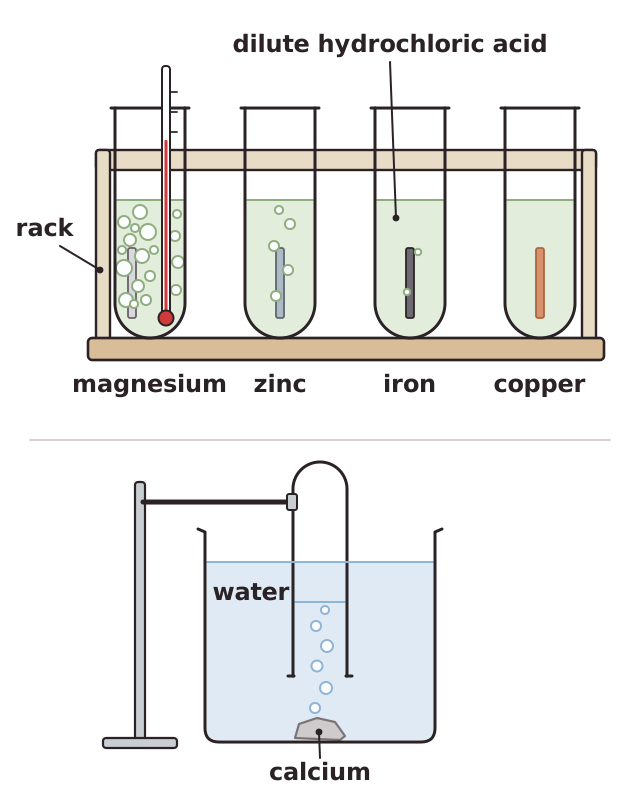
We can compare metals by how fast they react with water or dilute hydrochloric acid. Potassium, sodium and lithium react quickly with cold water to give a metal hydroxide and hydrogen. Calcium also reacts with cold water, but more slowly. Magnesium reacts very slowly with cold water but reacts with dilute acid. Metals react with dilute acid to make a salt and hydrogen, for example Mg + 2HCl → MgCl2 + H2. Zinc and iron react with dilute acid slowly. Copper does not react at all.
In an experiment you add the same size piece of each metal to the same volume of acid at the same temperature, then watch how fast bubbles of hydrogen form and whether the temperature rises. Faster bubbling means a more reactive metal. Hydrogen gives a squeaky pop with a lit splint.