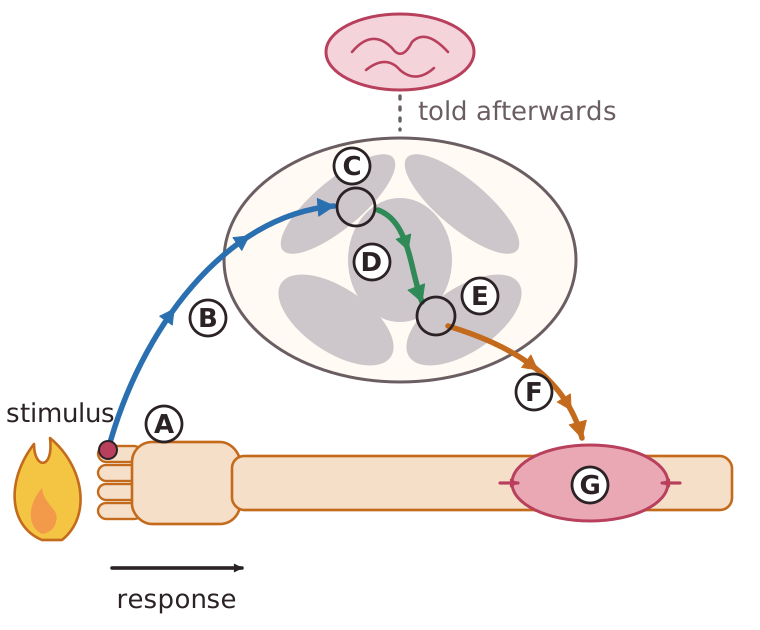
A reflex action is a rapid, automatic response to a stimulus. You do not think about it first, so it does not involve the conscious part of the brain. Examples are pulling your hand away from a hot object and the pupil getting smaller in bright light. Reflexes protect the body from harm.
The pathway of a reflex is called a reflex arc. The order is: stimulus, receptor, sensory neurone, relay neurone in the CNS, motor neurone, effector, response. The impulse goes straight from the sensory neurone to the motor neurone through a relay neurone, without waiting for a decision from the brain. This makes the response very fast.
Structure is linked to function. Only a few neurones and synapses are in the pathway, so the impulse reaches the effector quickly. The neurones are long, and their fatty sheaths help impulses travel fast. The relay neurone joins the sensory and motor neurones, so the response is automatic. The synapses make sure the impulse passes in one direction only, from the sensory neurone to the motor neurone. The ruler drop test measures the reaction time of a voluntary response, because you choose to catch the ruler, so it is not a reflex.