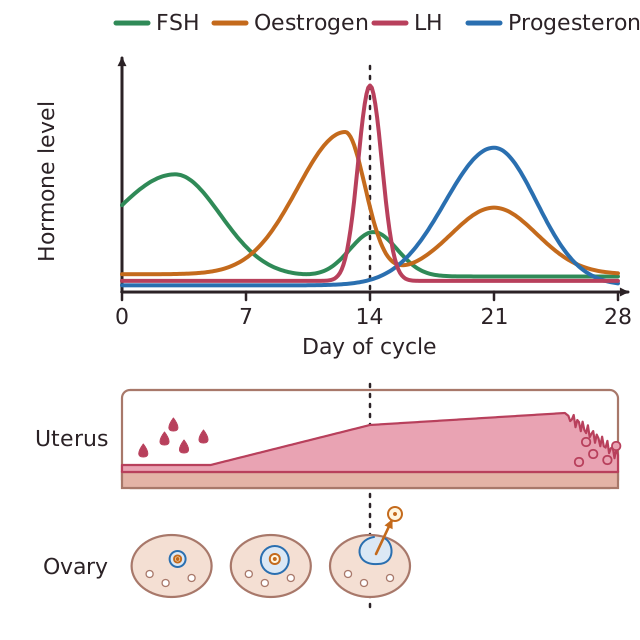
The menstrual cycle lasts about 28 days. Day 1 is the start of bleeding, when the lining of the uterus breaks down and leaves the body. Four hormones then work together, and each one affects the release of the others.
FSH from the pituitary gland makes an egg mature in an ovary and stimulates the ovary to release oestrogen. Oestrogen thickens the lining of the uterus. As oestrogen rises, it inhibits FSH release and stimulates the pituitary to release LH. A surge of LH around day 14 triggers ovulation, the release of an egg from the ovary.
After ovulation the ovary makes progesterone. Progesterone keeps the lining of the uterus thick and stops FSH and LH release, so no new egg will mature. If the egg is not fertilised, progesterone level falls, the lining breaks down and a new cycle begins. If an embryo implants, the lining is kept.
On a graph of hormone levels, oestrogen peaks just before the LH peak, and the LH peak is at about day 14. Progesterone is highest in the second half of the cycle. A fall in progesterone then comes just before bleeding starts.