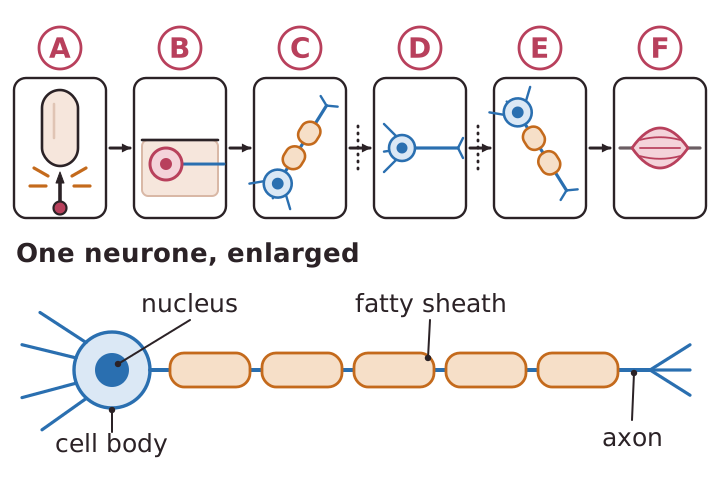
The nervous system lets the body detect changes and respond to them. It is made up of the central nervous system (CNS), which is the brain and spinal cord, and the nerves that run to and from it. The CNS is where information is processed and decisions are made.
Information travels as electrical impulses along nerve cells called neurones. A sensory neurone carries impulses from a sensory receptor to the CNS. A motor neurone carries impulses from the CNS to an effector. A relay neurone is found inside the CNS and connects sensory neurones to motor neurones. Sensory receptors are cells that detect a stimulus, such as light, sound, touch, heat or chemicals. Effectors are muscles or glands, and they carry out the response.
Sensory and motor neurones are long and thin. Each has a cell body with a nucleus and a long fibre called an axon, which is covered by a fatty insulating sheath. The sheath speeds up the impulse. Neurones do not touch one another. At the join between two neurones there is a tiny gap called a synapse. The impulse is carried across the gap by chemicals, which diffuse across the synapse and trigger a new impulse in the next neurone.