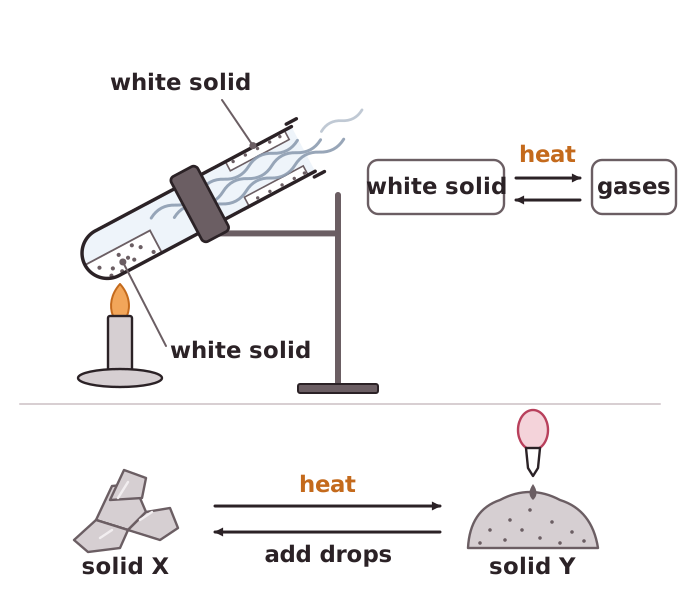
In most reactions the reactants turn into products and that is the end of it. In a reversible reaction the products can react to form the reactants again. The reaction can go in both directions, and this is shown in an equation with the symbol ⇌.
Heating blue hydrated copper sulfate drives off the water and leaves a white powder, anhydrous copper sulfate. Adding water to the white powder turns it blue again, so the change has been reversed. Another example is ammonium chloride. When it is heated it breaks down into ammonia and hydrogen chloride. When these gases cool they react to form ammonium chloride again.
Changing the reaction conditions, such as heating or adding water, changes which direction the reaction goes. If the forward reaction is endothermic, the reverse reaction is exothermic, and the same amount of energy is transferred in each direction.